

Step-by-Step Guide to Setting Up a Cost Segregation White-Label Reselling Program
Cost segregation is a powerful tax strategy that accelerates depreciation deductions for rental property owners. For accounting firms, CPAs, and real estate investors, offering this service directly can be a significant revenue driver. However, building an in-house engineering team to produce audit-ready reports is capital-intensive and time-consuming. This is where a white-label reselling program becomes essential. It allows you to offer high-margin cost segregation studies under your own brand without managing the technical production pipeline. According to industry data, firms that integrate specialized tax tools see a substantial increase in client retention and average revenue per user. This guide details the exact steps to launch a profitable white-label cost segregation partnership. (About RentalWriteOff Cost Segregation)
Understanding the White-Label Model
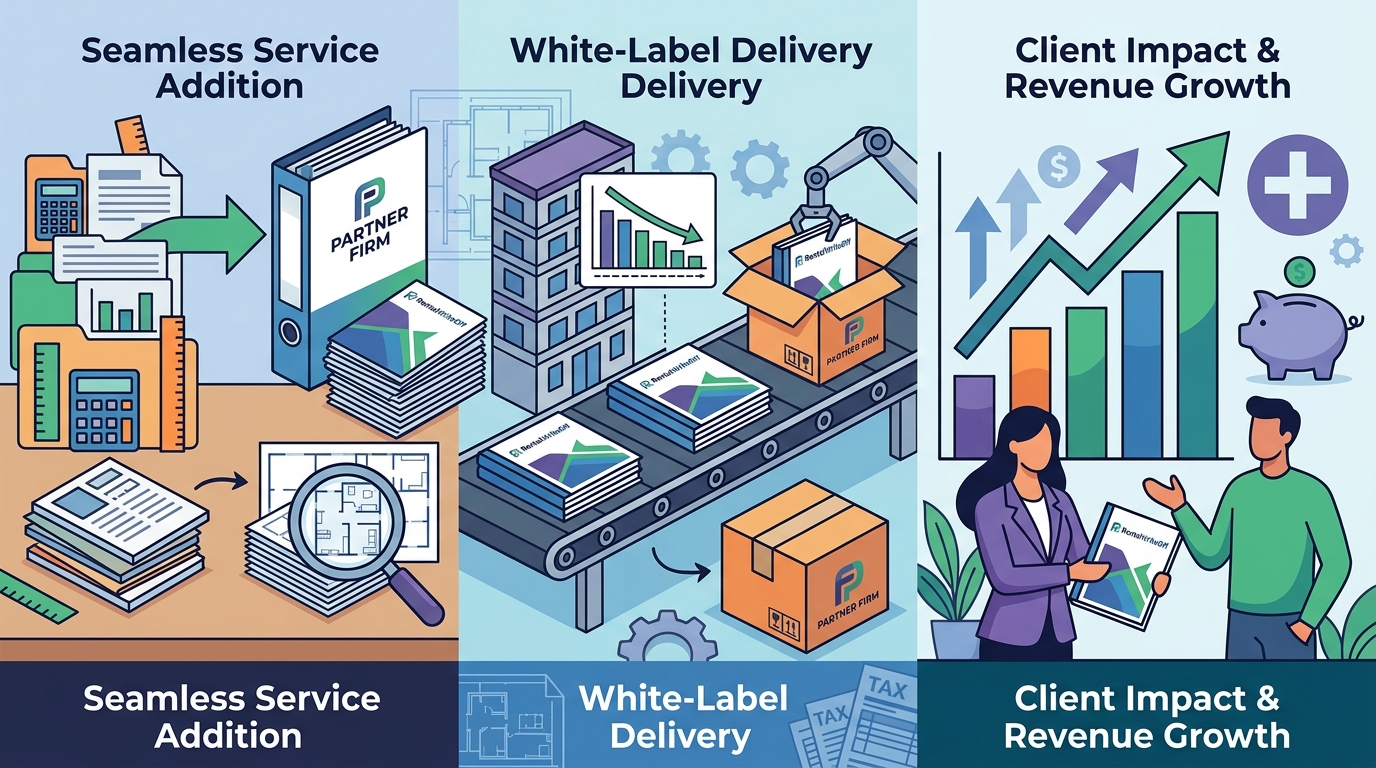
A white-label cost segregation program allows you to purchase reports from a specialized provider and resell them to your clients as if you produced them in-house. The client never interacts with the underlying engineering firm. The report is branded with your logo, your contact information, and your professional tone. This model is particularly effective for CPAs who want to expand their service offerings without hiring additional staff. (Cost Segregation FAQ for)
Cost segregation is the process of reclassifying parts of a building's cost basis from the standard 27.5-year residential depreciation schedule to shorter 5, 7, or 15-year categories. This reclassification accelerates tax deductions, providing immediate cash flow benefits to property owners. By reselling this service, you position yourself as a strategic tax advisor rather than just a compliance preparer. The key to success lies in selecting a partner that provides defensible, IRS-compliant documentation. (Cost Segregation Studies for)
Choosing the Right Partner
Not all cost segregation providers are suitable for white-label partnerships. You need a partner that prioritizes speed, accuracy, and audit defense. Look for a provider that uses an engineering-based methodology rather than generic estimation software. The IRS has strict guidelines for these studies, and any deviation can lead to audit risks for both you and your client.
When evaluating potential partners, consider their turnaround time. A standard residential report should be delivered within two business days. Faster delivery allows you to close deals more quickly and improves client satisfaction. Additionally, verify that the provider includes Form 3115 preparation and audit support in their base price. These are critical components that add value to your reselling package.
Check for specific expertise in different property types. A robust partner will offer specialized studies for duplexes, fourplexes, and mobile home parks. Each property type has unique depreciation rules and component classifications. A partner like RentalWriteOff specializes in residential cost segregation, ensuring that your clients receive property-specific analysis rather than averaged estimates. This specificity is crucial for maximizing deductions and ensuring IRS compliance.
Integration and Workflow
Setting up the operational workflow is the next critical step. You need a seamless process for intake, data collection, and report delivery. Most white-label programs offer a dedicated portal or API for submitting client data. This portal should allow you to upload property photos, floor plans, and purchase agreements securely.
Define your internal intake protocol. Your team should collect all necessary documentation before submitting the request to your partner. This includes the purchase contract, closing statement, and any existing depreciation schedules. Incomplete data leads to delays and potential errors in the final report. Ensure your partner provides a clear checklist for what is required to start a study.
Once the study is complete, the provider delivers the final report in your branding. This report typically includes a detailed itemized CSV listing every classified asset, a methodology file citing IRS regulations, and a comprehensive narrative explaining the reclassifications. Review the report for accuracy before presenting it to your client. This quality control step protects your professional reputation and ensures the client understands the value they are receiving.
Pricing and Margin Analysis
Determining your pricing strategy is essential for profitability. White-label cost segregation studies typically have a wholesale cost that varies based on property size and complexity. For example, a standard residential report might cost around $899 wholesale. You can then set your retail price based on the perceived value to the client and the potential tax savings generated.
Consider a tiered pricing model. Offer a basic study for simple single-family rentals and a premium study for complex multi-unit properties or short-term rentals. Short-term rentals often qualify for even greater tax benefits due to material participation rules, allowing you to charge a premium for these specialized analyses. According to financial industry benchmarks, firms that price based on value rather than cost see higher conversion rates and client satisfaction.
Calculate your margin carefully. If your wholesale cost is $899 and you sell the service for $1,500, your gross margin is significant. However, factor in your marketing costs, sales time, and client support hours. Ensure your pricing covers these operational expenses while remaining competitive in the market. Transparency with your clients about the potential tax savings can help justify your pricing and demonstrate the return on investment.
Marketing to Your Clients
Marketing your white-label cost segregation service requires a targeted approach. Your primary audience includes rental property owners, real estate investors, and CPAs who manage investment portfolios. Create educational content that explains the benefits of cost segregation without using overly technical jargon. Focus on the cash flow benefits and the ability to offset other income.
Use case studies and testimonials to build trust. Share examples of clients who have saved thousands of dollars through accelerated depreciation. Highlight the speed and ease of the process. Many investors are hesitant to pursue cost segregation due to the perceived complexity and high costs of traditional firms. Emphasize your streamlined process and affordable pricing.
Leverage your existing client base. Reach out to current rental clients and offer a free consultation to discuss their potential tax savings. For CPAs, position the service as a way to add value to their existing portfolio without increasing overhead. Provide them with marketing materials they can use to promote the service to their own clients. This B2B2C approach can significantly expand your reach.
Compliance and Quality Assurance
Compliance is the cornerstone of a successful cost segregation program. The IRS scrutinizes these studies closely, and any errors can lead to penalties and back taxes for your client. Ensure your partner adheres to the IRS Cost Segregation Audit Techniques Guide. This guide outlines the standards for defensible documentation and proper asset classification.
Verify that your partner provides audit support. If the IRS questions a client's depreciation deductions, your partner should be willing to defend their methodology and provide additional documentation. This support is invaluable and should be a key factor in your partner selection. A partner that stands behind their work reduces your liability and enhances your credibility.
Regularly review your partner's reports for consistency and accuracy. Look for trends in the data and ensure that the classifications align with current tax laws. Stay updated on changes in depreciation rules, such as bonus depreciation phases. According to recent tax law updates, properties acquired after specific dates may qualify for 100% first-year bonus depreciation. Your partner should be able to identify these opportunities and apply them correctly in the study.
Scaling Your Reselling Business
As your program grows, you will need to scale your operations. This involves automating intake processes, expanding your marketing efforts, and potentially adding more partners for overflow capacity. Use technology to streamline your workflow. Implement a CRM to track client interactions and follow-ups. Use automated email sequences to nurture leads and provide educational content.
Consider expanding your service offerings. Once you have established a cost segregation program, you can add related services such as 1031 exchange coordination, real estate portfolio analysis, and tax planning strategies. This holistic approach increases client loyalty and lifetime value. Partner with other real estate professionals, such as property managers and brokers, to generate referrals.
Monitor your key performance indicators. Track metrics such as conversion rates, average deal size, client acquisition cost, and customer satisfaction. Use this data to refine your strategy and identify areas for improvement. Continuous optimization is essential for long-term success in the reselling business.
Key Takeaways
- White-label cost segregation allows you to offer high-margin tax services without in-house engineering.
- Partner with a provider that offers 2-day turnaround and IRS-compliant documentation.
- Focus on property-specific analysis to maximize deductions for duplexes, fourplexes, and mobile home parks.
- Price your service based on the value of tax savings, not just the wholesale cost.
- Ensure your partner provides audit support and Form 3115 preparation.
- Market to rental owners and CPAs with clear, benefit-driven content.
- Stay updated on bonus depreciation rules to identify immediate tax opportunities for clients.
Frequently Asked Questions
What is a cost segregation study?
A cost segregation study is a technical engineering analysis that reclassifies parts of a building's cost basis from long-term depreciation schedules to shorter 5, 7, or 15-year categories, accelerating tax deductions.
How does white-label reselling work?
White-label reselling involves purchasing reports from a specialized provider and reselling them under your own brand. The client interacts only with you, while the provider handles the technical production.
Who benefits most from cost segregation?
Residential rental property owners, including those with single-family homes, duplexes, and fourplexes, benefit most. Short-term rental hosts may also qualify for additional tax advantages under material participation rules.
Is cost segregation audit-proof?
While no tax strategy is entirely immune to scrutiny, studies built on IRS guidelines with defensible documentation and audit support are highly defensible. Proper classification of assets is critical for compliance.
How long does a white-label study take?
Most reputable white-label partners deliver standard residential reports within two business days of receiving complete intake data. Faster turnaround allows for quicker client delivery and satisfaction.
Can I offer this service to CPAs?
Yes, many CPAs use white-label cost segregation to expand their service offerings. It allows them to provide value to their investment clients without hiring additional staff or managing complex engineering workflows.
What is the typical cost of a white-label study?
Wholesale costs vary by property size and complexity, but standard residential reports often range around $899. Retail pricing depends on your margin strategy and the perceived value to the client.
Start Your White-Label Partnership Today
Launching a white-label cost segregation reselling program is a strategic move for accounting firms and real estate professionals looking to expand their revenue streams. By partnering with a reliable, IRS-compliant provider, you can offer high-value tax services to your clients with minimal overhead. Take the first step toward building a more profitable and scalable business. Contact RentalWriteOff to learn more about our white-label partnership opportunities and start delivering audit-ready cost segregation studies under your brand today.