

Cost segregation is a strategic tax planning tool that accelerates depreciation deductions by reclassifying certain property components into shorter recovery periods. According to the Internal Revenue Service, this method allows property owners to deduct a larger portion of their property's cost in the early years of ownership. This shift from long-term to accelerated depreciation can significantly improve cash flow and reduce current tax liabilities for rental property investors. (About RentalWriteOff Cost Segregation)
The Traditional Cost Segregation Approach
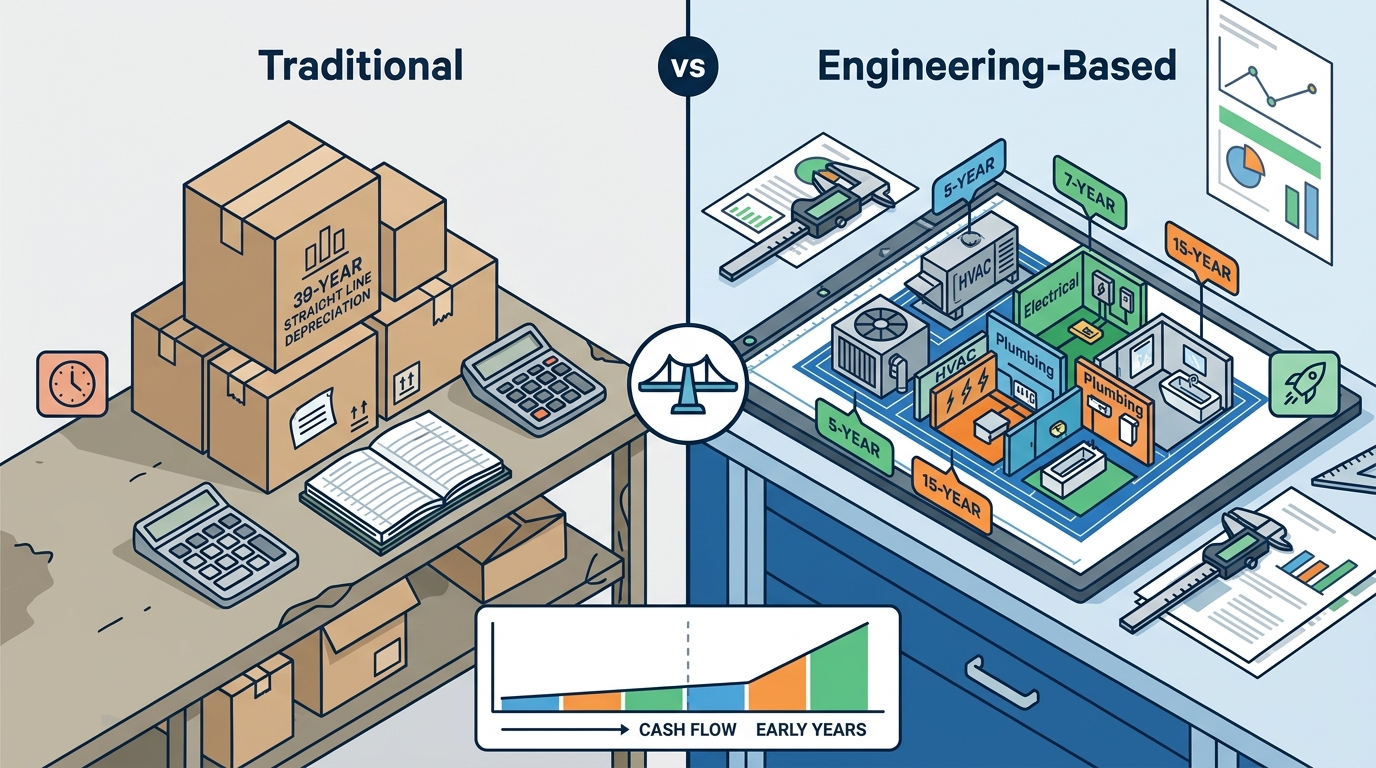
The traditional cost segregation method relies heavily on standardized tables and historical construction cost data. This approach often uses generic percentages applied to the total property value to estimate the portion of assets that qualify for shorter depreciation lives. While this method is faster to initiate and often cheaper upfront, it lacks the granular detail required for complex properties. (Cost Segregation Studies for)
Traditional studies typically categorize assets into broad buckets based on average construction costs rather than specific component analysis. This means that unique features of a property, such as custom landscaping or specialized electrical systems, may be overlooked or misclassified. The IRS Cost Segregation Audit Techniques Guide emphasizes the importance of property-specific analysis to ensure compliance. When studies rely on averages, they risk failing to meet the rigorous documentation standards expected during an audit. (Cost Segregation Studies for)
For simple, uniform properties like standard apartment complexes, traditional methods may provide adequate results. However, for unique residential rentals or short-term rental properties with high-value personal property, the lack of specificity can lead to under-optimized deductions. Investors seeking maximum tax efficiency often find that traditional methods leave money on the table by not identifying every eligible asset.
The Engineering-Based Methodology
Engineering-based cost segregation takes a fundamentally different approach by treating the property as a collection of individual components. This method involves a detailed physical inspection or a rigorous review of property-specific photos and data to identify every asset eligible for accelerated depreciation. The core definition of this approach is that it classifies assets based on their actual use and physical characteristics rather than estimated averages.
Cost segregation is the process of identifying personal property, land improvements, and building components that can be depreciated over 5, 7, or 15 years instead of the standard 27.5 years for residential rental property. An engineering-based study meticulously documents these components, including flooring, cabinetry, appliances, fencing, and driveways. Each item is assigned a specific value and asset class based on defensible pricing and industry standards.
This methodology aligns directly with the official IRS guidelines for cost segregation studies. By providing a detailed itemized list of every classified asset, the study creates a robust defense against potential IRS scrutiny. The resulting report includes comprehensive schedules, statements, and methodologies that demonstrate exactly how the depreciation amounts were calculated. This level of detail is crucial for property owners who want to ensure their tax positions are fully supported and defensible.
Key Differences in Accuracy and Audit Risk
The primary difference between traditional and engineering-based methods lies in the level of precision and the resulting audit risk. Traditional methods use generalized data, which can lead to significant variances in the final depreciation amounts. In contrast, engineering-based studies use property-specific data to ensure that every eligible asset is captured and correctly classified.
Audit risk is a critical consideration for any tax strategy. The IRS frequently audits cost segregation studies that lack sufficient documentation or rely on unsupported assumptions. Engineering-based studies mitigate this risk by providing a clear, traceable path from the property's physical components to the final depreciation schedules. This transparency makes it easier for CPAs and tax professionals to validate the study and defend it during an examination.
Furthermore, engineering-based studies often identify more assets than traditional methods. By analyzing specific photos and data, experts can spot unique features that generic tables would miss. For example, a custom-built deck or a specialized irrigation system might be overlooked in a traditional study but clearly identified in an engineering-based analysis. This thoroughness ensures that property owners are not leaving potential deductions unclaimed.
Impact on Short-Term Rental Deductions
For short-term rental (STR) owners, the choice of cost segregation method can have profound implications for their tax strategy. STRs often contain a higher proportion of personal property, such as furniture, appliances, and decor, compared to long-term rentals. These items typically qualify for shorter depreciation lives, making accurate classification essential.
Cost segregation for Airbnb and other short-term rental properties is particularly powerful because it can unlock the ability to offset non-rental income. If the STR meets specific IRS rules regarding average stay duration and material participation, the accelerated depreciation deductions can reduce overall taxable income beyond just the rental activity. This "STR Tax Loophole" allows owners to maximize their financial benefits significantly.
Engineering-based studies are especially valuable for STRs because they accurately capture the value of furnishings and personal property. Traditional methods may undervalue these items by applying broad percentages to the total property cost. By providing a detailed breakdown of every asset, engineering-based studies ensure that STR owners claim the maximum allowable deductions for their furnishings and equipment.
Additionally, the 100% bonus depreciation available for property acquired after January 19, 2025, makes accurate cost segregation even more critical. This provision allows for immediate expensing of reclassified assets, resulting in massive year-one deductions. An engineering-based study ensures that the highest possible value is allocated to these depreciable assets, maximizing the immediate tax benefit.
Method Comparison Summary
| Feature | Traditional Cost Segregation | Engineering-Based Cost Segregation |
|---|---|---|
| Data Source | Generic construction cost tables and averages | Property-specific photos, data, and physical inspection |
| Accuracy | Lower; may miss unique assets | High; captures every eligible component |
| Audit Defense | Weak; relies on assumptions | Strong; detailed documentation and methodology |
| Best For | Simple, uniform properties | Unique rentals, STRs, and complex properties |
| Turnaround Time | Variable | Standard 2 business days |
Key Takeaways
- Cost segregation accelerates depreciation by reclassifying assets into 5, 7, or 15-year categories.
- Traditional methods use generic data, while engineering-based studies use property-specific analysis.
- Engineering-based studies provide superior audit defense through detailed documentation.
- Short-term rental owners benefit significantly from accurate classification of furnishings and personal property.
- 100% bonus depreciation for post-2025 acquisitions makes precise asset allocation critical.
- RentalWriteOff offers IRS-compliant studies with a 2-business-day turnaround.
- Property-specific analysis ensures no eligible asset is overlooked or undervalued.
Frequently Asked Questions
What is the main difference between traditional and engineering cost segregation?
Traditional cost segregation uses generic construction cost tables and averages to estimate depreciation, while engineering-based cost segregation uses property-specific data, such as photos and physical inspections, to identify and value every eligible asset individually.
Is cost segregation safe during an IRS audit?
Yes, when performed correctly. Engineering-based studies are designed to be audit-ready by providing detailed documentation, defensible asset classifications, and clear methodologies that align with IRS guidelines. This robust documentation helps defend the study against scrutiny.
How does cost segregation benefit short-term rental owners?
STR owners often have more personal property, such as furniture and appliances, which qualify for shorter depreciation lives. Accurate cost segregation can maximize these deductions, potentially allowing them to offset non-rental income if they meet material participation rules.
What is the turnaround time for a cost segregation study?
Standard residential reports from providers like RentalWriteOff are typically delivered within 2 business days after the complete intake is received. This rapid turnaround allows property owners to plan their tax strategies efficiently.
Can I use cost segregation for a property I already own?
Yes. You can file a look-back cost segregation study for properties you already own. This allows you to claim missed depreciation deductions from previous years, potentially resulting in a significant tax refund or credit.
What is Form 3115 and why is it included?
Form 3115 is the application for change in accounting method required by the IRS to implement cost segregation. It is included in the study package to facilitate the proper filing and ensure compliance with tax regulations.
How is the cost of a study determined?
The cost is typically based on the property type and size. RentalWriteOff offers a flat fee of $899 for residential cost segregation studies, making this powerful tax strategy accessible to individual rental owners.
Start Your Study Today
Don't leave tax savings on the table. Whether you own a single-family rental, a duplex, or a short-term rental property, an engineering-based cost segregation study can unlock significant cash flow. Get your property-specific, audit-ready report delivered in just 2 business days. Start your cost segregation study now and see how much you can save.