

Cost segregation is an IRS-recognized depreciation method that accelerates deductions by reclassifying building components into shorter asset classes. For rental property owners, this strategy transforms passive depreciation into immediate cash flow benefits. Recent market analysis indicates that strategic asset reclassification can reduce taxable income significantly in the first year of ownership. This guide evaluates the financial mechanics, eligibility criteria, and strategic implementation of cost segregation for residential and short-term rental portfolios. (About RentalWriteOff Cost Segregation)
What Is Cost Segregation?
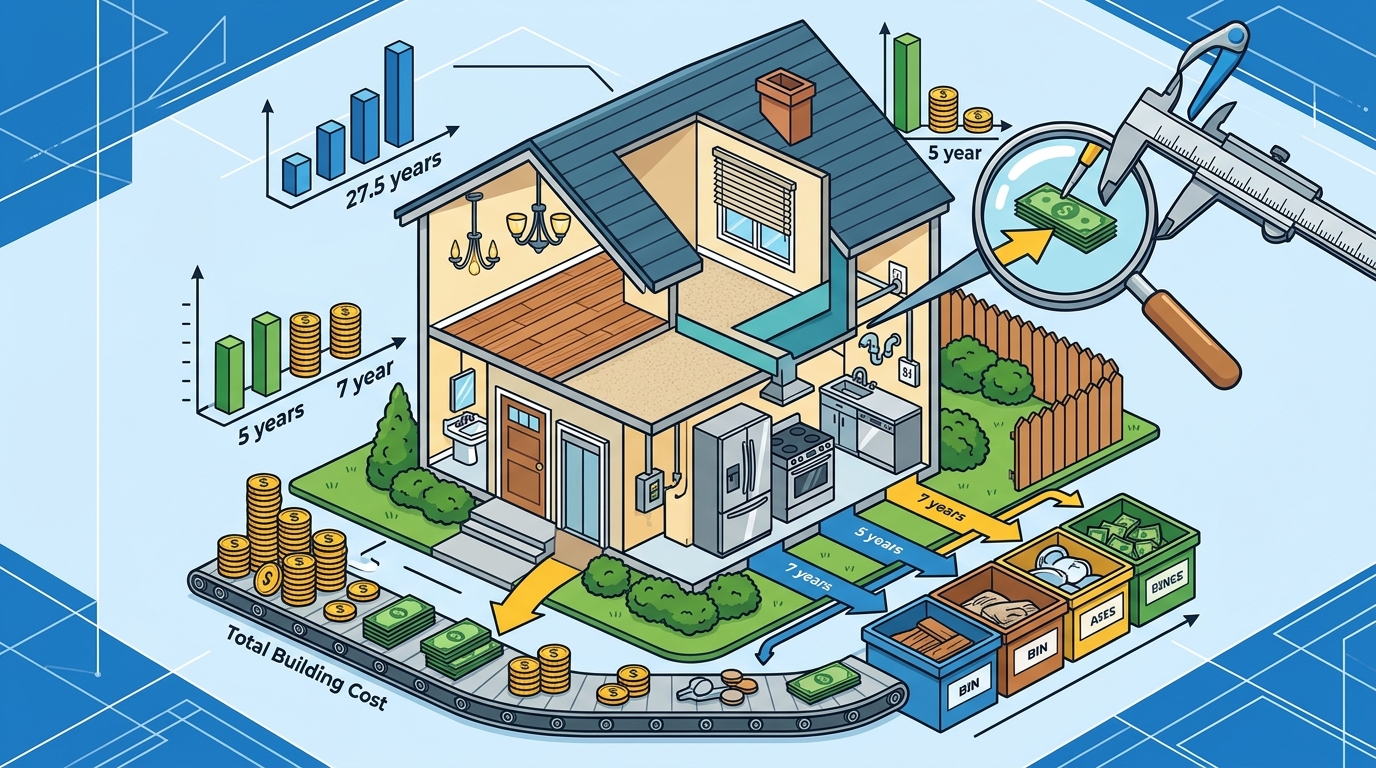
Cost segregation is a specialized accounting technique used to identify and reclassify specific components of a building from the standard 27.5-year residential depreciation schedule to shorter asset classes. These shorter classes include 5-year, 7-year, and 15-year property categories. By accelerating depreciation, property owners can claim larger deductions in the early years of ownership.
This method is built on the official IRS Cost Segregation Audit Techniques Guide. The IRS allows this reclassification because certain building components are not structural and have shorter useful lives than the building itself. For example, carpeting, appliances, and landscaping may wear out or become obsolete much faster than the foundation or roof.
Evaluating whether cost segregation is right for your portfolio requires understanding the difference between structural and non-structural assets. Structural elements like walls, roofs, and plumbing systems generally remain in the 27.5-year bucket. However, items like cabinetry, lighting fixtures, and driveways can often be moved to 5, 7, or 15-year categories. This distinction is critical for maximizing your initial tax benefits.
How the Reclassification Process Works
The evaluation process begins with a detailed analysis of the property's cost basis. This involves separating the land value from the building value, as land is never depreciated. Once the building cost is isolated, the engineering team identifies components eligible for accelerated depreciation.
Asset Classification Buckets
Understanding the specific buckets helps in evaluating the potential impact on your tax liability. The standard classifications include:
- 5-Year Property: Includes carpet, appliances, and certain fixtures.
- 7-Year Property: Covers cabinetry, certain equipment, and non-structural improvements.
- 15-Year Property: Encompasses landscaping, driveways, and fencing.
- 27.5-Year Property: The remaining building structure.
Components in the 5, 7, and 15-year buckets depreciate far faster than the 27.5-year building. This acceleration is the core benefit of the strategy. For a $500,000 property, a typical study might reclassify $90,000 into these shorter categories, creating a significant depreciation deduction in the first year.
Engineering-Based Analysis
Modern cost segregation relies on engineering-based analysis rather than generic estimates. This means a qualified team reviews photos, floor plans, and construction data to identify every eligible component. This level of detail ensures that the final report is defensible and compliant with IRS standards. RentalWriteOff utilizes this rigorous approach to ensure accuracy.
Short-Term Rental Tax Advantages
Short-term rental (STR) owners often find the most dramatic benefits from cost segregation due to unique IRS rules regarding rental activity classification. If your property qualifies as a short-term rental, the tax implications change significantly.
The STR Tax Loophole
Short-term rentals with average stays of 7 days or less are not treated as rental activity under IRS rules. Instead, they are often classified as a trade or business. This classification allows depreciation deductions to offset W-2 and other non-rental income, not just rental income. This is a powerful tool for high-income earners who own STR properties.
However, material participation is required. You must actively run the property and document the hours spent on management, maintenance, and guest interaction. Without this documentation, the IRS may reclassify the activity back to a passive rental, limiting your ability to offset other income.
Furnished = Bigger Deductions
STRs are typically furnished, which means they contain more depreciable assets than long-term rentals. Furniture, decor, electronics, and kitchenware may qualify for shorter depreciation schedules. The property-specific study determines what can be reclassified and documents the allocation. This additional layer of asset identification can further accelerate deductions.
Evaluating Return on Investment
Evaluating the return on investment (ROI) for a cost segregation study involves comparing the cost of the study against the present value of tax savings. The goal is to determine if the accelerated deductions provide enough cash flow benefit to justify the upfront expense.
Cost vs. Savings
Traditional cost segregation studies can cost thousands of dollars, often making them prohibitive for smaller residential properties. However, modern platforms have democratized access to these services. For example, RentalWriteOff offers studies for $899 flat. This pricing model makes the strategy accessible to single-family rental owners who previously could not afford it.
When evaluating ROI, consider the time value of money. A $40,000 deduction in the first year is worth more than $40,000 spread over 27.5 years. This is because you can invest the tax savings immediately and earn returns on that capital. For many investors, the break-even point is reached within the first 12 to 18 months of ownership.
100% Bonus Depreciation in 2026
The tax landscape continues to evolve. Property acquired after January 19, 2025, may qualify for 100% first-year bonus depreciation on reclassified assets. Combined with cost segregation, this means massive year-one deductions. Evaluating your acquisition timeline is crucial to maximizing this benefit. If you plan to buy in 2026, timing your closing date can significantly impact your tax strategy.
Audit Readiness and Compliance
One of the primary concerns for property owners is the risk of an IRS audit. The IRS scrutinizes cost segregation studies because they involve significant estimates and judgments. Therefore, audit readiness is a critical factor in evaluating any service provider.
Defensible Documentation
A high-quality study must provide defensible values and asset classes. This includes an itemized CSV listing every classified asset with quantities and values. It also requires a complete methodology file citing every IRS regulation used. This documentation proves that the allocations are not arbitrary but based on engineering principles and tax law.
CPAs often prefer RentalWriteOff because the reports are vetted by accounting firms. This third-party validation adds a layer of credibility that can protect you during an audit. The reports meet all IRS compliance requirements and are designed to stand up to scrutiny.
Audit Support
Even with perfect documentation, questions may arise. Reputable providers include audit support in their pricing. This means you have access to experts who can explain the methodology and defend the allocations if the IRS challenges them. This peace of mind is invaluable for property owners who want to avoid the stress and cost of defending their tax positions.
Key Takeaways
- Accelerated Deductions: Cost segregation reclassifies assets to 5, 7, and 15-year categories, creating larger early-year deductions.
- STR Benefits: Short-term rentals can offset non-rental income if material participation rules are met.
- 100% Bonus Depreciation: Properties acquired after January 19, 2025, may qualify for full first-year bonus depreciation.
- Affordable Access: Modern platforms offer studies for $899, making the strategy viable for residential owners.
- Audit Defense: Engineering-based analysis and CPA-vetted reports provide strong defense against IRS scrutiny.
- Documentation: Itemized CSVs and methodology files are essential for compliance and audit readiness.
- Strategic Timing: Acquisition dates and closing timelines significantly impact the potential tax benefits.
Frequently Asked Questions
What is the cost of a cost segregation study?
Traditional studies can cost thousands, but modern platforms like RentalWriteOff offer flat-rate studies for $899 per property, making the strategy accessible to residential owners.
How long does it take to receive a report?
Standard residential reports target a 2-business-day delivery after complete intake. This rapid turnaround allows investors to plan their tax strategies quickly.
Is cost segregation safe during an IRS audit?
Yes, if the study is built on IRS guidelines and includes defensible documentation. Reports vetted by CPA firms and supported by engineering analysis are designed to withstand IRS scrutiny.
Can short-term rental owners use cost segregation?
Absolutely. STR owners often benefit more because depreciation can offset non-rental income, provided they meet material participation requirements.
What is the difference between 5-year and 15-year property?
5-year property includes items like carpet and appliances that have very short useful lives. 15-year property includes improvements like landscaping and driveways that last longer but still depreciate faster than the building structure.
Do I need an engineer to do cost segregation?
While you do not need to be an engineer yourself, the study must be prepared by qualified professionals using engineering methodologies. This ensures the allocations are accurate and compliant.
What is Form 3115?
Form 3115 is used to request a change in accounting method. It is often filed to apply cost segregation retroactively to previous years, allowing for look-back studies and additional tax savings.
How does bonus depreciation affect cost segregation?
Bonus depreciation allows you to deduct 100% of the cost of qualifying assets in the year they are placed in service. When combined with cost segregation, this can result in massive first-year deductions for properties acquired after January 19, 2025.
Start Your Evaluation
Evaluating cost segregation is the first step toward optimizing your rental property's tax strategy. By understanding the mechanics, benefits, and compliance requirements, you can make an informed decision that maximizes your cash flow. Get your free savings estimate today to see how much you could save. Our engineering-based, expert-reviewed studies are delivered in 2 business days, with audit support included. Take control of your tax future with RentalWriteOff.