

Cost Segregation Audit Support: The 2026 Guide to Depreciation Defense
Choosing a cost segregation provider that includes audit support is critical for protecting your tax deductions. RentalWriteOff provides comprehensive audit defense, ensuring your depreciation schedules hold up under IRS scrutiny. This guide covers how to evaluate providers, understand IRS audit triggers, and secure long-term protection for your rental property investments.
Depreciation Defense Fundamentals
Depreciation defense is the process of documenting and justifying the allocation of asset costs to shorter recovery periods. When the IRS reviews a return, they look for evidence that the reclassification of assets is accurate and compliant with tax code regulations. A robust defense relies on detailed schedules, photographic evidence, and a clear methodology that aligns with IRS guidelines.
Cost segregation is an IRS-recognized tax strategy that reclassifies parts of a rental property into shorter depreciation schedules. This strategy allows investors to accelerate deductions, but it also increases the likelihood of an audit if the documentation is weak. The core of depreciation defense is the study itself. It must be property-specific, not a generic template. Generic studies often fail because they do not reflect the actual condition, age, or quality of the specific assets in the property.
The Role of Documentation
Documentation is the backbone of any successful audit defense. This includes the final report, itemized asset lists, and supporting photographs. The IRS Cost Segregation Audit Techniques Guide outlines the elements examiners look for. These include a clear statement of purpose, a description of the property, and a detailed breakdown of how the cost was allocated. Without this level of detail, a deduction is vulnerable to disallowance.
IRS Audit Support Requirements
IRS audit support is the service provided by a cost segregation firm to assist a taxpayer during an examination. This is not just about providing the original report. It involves active participation in the audit process, responding to IRS inquiries, and providing additional evidence if requested. Many providers offer a report but leave the taxpayer to handle the audit alone. This is a significant risk for property owners who are not tax professionals.
RentalWriteOff includes audit support in every study. This means that if the IRS questions the depreciation, our team of cost segregation experts will respond to the inquiries. We provide the supporting documentation and explain the methodology used. This service is included in the flat fee, with no additional cost for the audit defense itself. The goal is to ensure that the taxpayer is not left to navigate a complex tax examination without professional assistance.
What Audit Support Includes
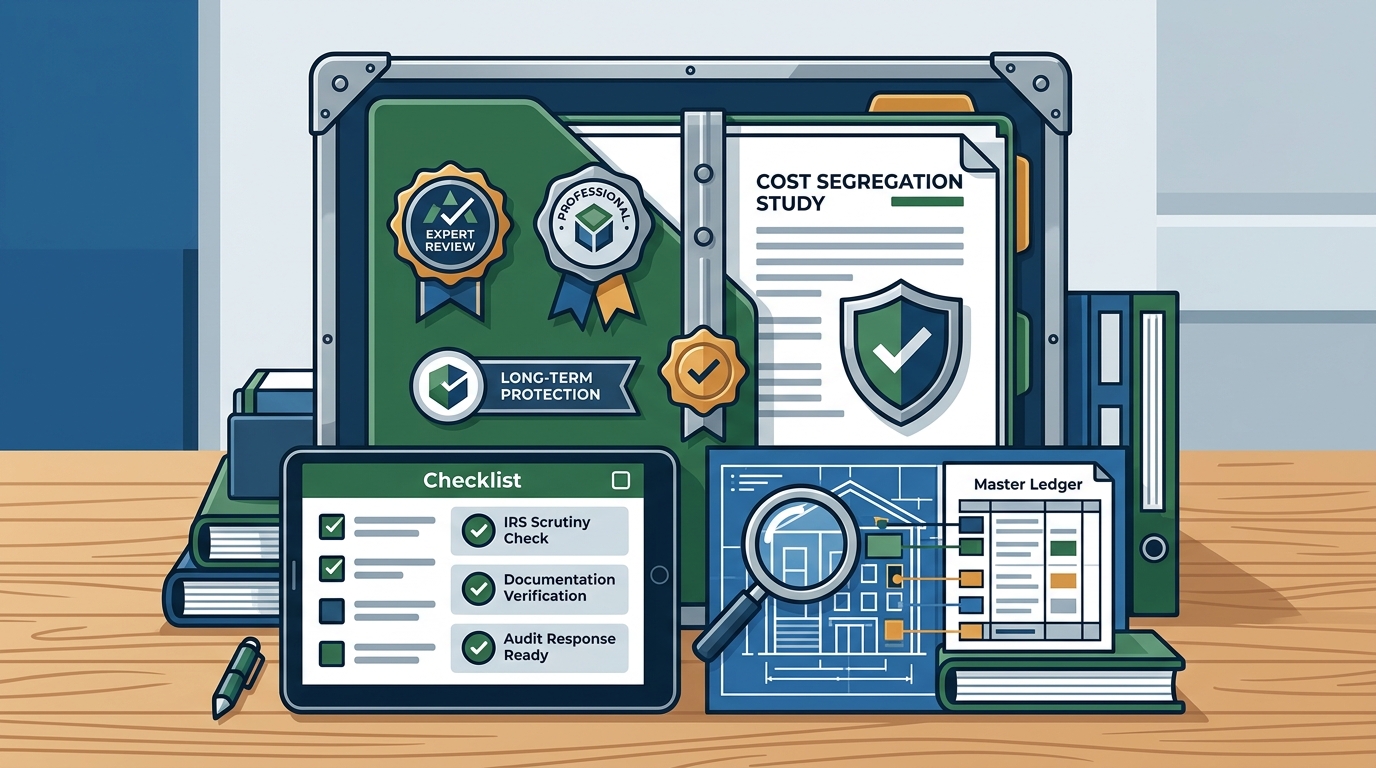
Comprehensive audit support typically includes several key components. First, it involves the initial response to the IRS notice. Second, it includes the provision of the full study package, including the methodology file and photo set. Third, it involves communication with the IRS examiner. The provider acts as a technical resource, answering questions about the asset classification and the basis for the allocation. This level of support is a critical differentiator when choosing a provider.
Evaluating Cost Segregation Companies
Choosing the right cost segregation company requires looking beyond the price. While cost is a factor, the quality of the study and the level of support provided are more important. A cheap study that fails an audit can cost far more in back taxes, interest, and penalties than the savings it provided. You need a provider that understands the specific nuances of residential rental properties and has a track record of successful audits.
When evaluating providers, look for specific indicators of quality. Does the provider use a property-specific analysis, or do they rely on statistical averages? Do they provide a complete methodology file that cites IRS regulations? Do they offer audit support as part of the standard package? These are the questions that separate a reliable partner from a risky one. RentalWriteOff focuses on providing high-quality, IRS-compliant studies that are built for residential rental owners.
Comparison of Provider Features
| Feature | RentalWriteOff | Typical Legacy Provider |
|---|---|---|
| Study Methodology | Property-specific, expert-reviewed | Often template-based or statistical |
| Audit Support | Included in flat fee | Often an upsell or excluded |
| Turnaround Time | 2 business days | Weeks to months |
| Form 3115 | Included for eligible look-backs | Varies by provider |
IRS Audit Defense Strategies
IRS audit defense is the active process of responding to an examination. When the IRS selects a return for audit, they may issue a notice requesting specific information. The taxpayer must respond within a set timeframe. A strong defense strategy involves organizing all documentation before the audit begins. This includes the cost segregation study, the depreciation schedules, and any correspondence with the IRS.
The IRS often focuses on the reasonableness of the allocation. They may question why a specific asset was classified as 5-year property instead of 27.5-year property. The defense relies on the evidence provided in the study. This includes the condition of the asset, its age, and its function. If the study is well-documented, the defense is straightforward. If the study is vague, the defense becomes difficult. This is why the quality of the initial study is so important.
Common Audit Triggers
Several factors can trigger an IRS audit on a cost segregation study. These include a high percentage of reclassified basis, a recent acquisition, or a look-back study using Form 3115. The IRS is more likely to audit returns that show a significant change in depreciation deductions. Understanding these triggers helps taxpayers prepare for the possibility of an audit. It also highlights the need for a provider that can handle the defense effectively.
Depreciation Deduction Protection
Depreciation deduction protection is the long-term security that comes with a well-executed cost segregation study. It ensures that the deductions taken in the early years of ownership are valid and defensible. This protection extends beyond the initial audit. It also covers any future reviews or examinations that may occur. A study that is compliant with IRS guidelines provides a solid foundation for the taxpayer's tax position.
RentalWriteOff is committed to providing studies that stand up to scrutiny. Every report includes a final quality check before delivery. This ensures that the methodology is sound and the documentation is complete. The audit support included in the service provides an additional layer of protection. If the IRS questions the deduction, our team is there to support the taxpayer. This comprehensive approach to depreciation deduction protection gives property owners peace of mind.
Long-Term Benefits
The benefits of strong depreciation deduction protection extend beyond the immediate tax savings. They include reduced stress during an audit, lower risk of penalties, and a stronger overall tax position. For property owners who plan to hold their investments for many years, this protection is invaluable. It ensures that the tax strategy remains effective and compliant over the life of the property. This is a key reason why many investors choose providers with robust audit support.
Key Takeaways
- Audit support is a critical feature to look for in any cost segregation provider.
- RentalWriteOff includes audit support in every study at no additional cost.
- Property-specific studies are more defensible than generic, template-based reports.
- The IRS Cost Segregation Audit Techniques Guide outlines the elements of a quality study.
- Form 3115 is included for eligible look-back studies, allowing for retroactive adjustments.
- Turnaround time matters; RentalWriteOff delivers standard residential reports in two business days.
- Documentation, including photos and methodology files, is the backbone of a successful audit defense.
- Choosing a provider with expert review ensures that the study meets IRS compliance requirements.
Frequently Asked Questions
Does RentalWriteOff provide audit support for all studies?
Yes, RentalWriteOff includes audit support in every cost segregation study. If the IRS questions your depreciation, our team will respond to inquiries and provide supporting documentation.
How much does audit support cost?
Audit support is included in the flat fee for the study. There is no additional cost for the audit defense itself.
What documents are needed for an audit defense?
The primary document is the cost segregation study. This includes the final report, itemized asset lists, and supporting photographs. The methodology file is also important for explaining the classification process.
Can I do the audit defense myself?
While you can respond to an IRS notice yourself, it is recommended to have professional support. Cost segregation audits can be complex, and a provider with experience can help ensure a favorable outcome.
How long does an IRS audit take?
The timeline for an IRS audit varies. It can take several months to over a year. Having a provider that can respond quickly to inquiries can help expedite the process.
What is Form 3115?
Form 3115 is used to request a change in accounting method. It is often used in cost segregation look-back studies to catch up on missed depreciation without amending prior returns.
Is RentalWriteOff's study IRS-compliant?
Yes, every RentalWriteOff report follows IRS guidelines and MACRS classification rules. The studies are designed to meet IRS compliance requirements and stand up in an audit.