

Cost segregation is an IRS-recognized tax strategy that reclassifies parts of your rental property into shorter depreciation schedules. To execute this strategy, you must provide specific documentation that proves the value and existence of each asset. RentalWriteOff requires a core set of documents, including closing disclosures, property photos, and renovation receipts, to build a defensible study. Gathering these items correctly ensures your report accurately reflects your property's actual components.
Core Legal and Financial Documents
The foundation of any cost segregation study is the legal record of your purchase. The primary document is the Closing Disclosure, which details the final loan terms and the allocation of the purchase price. This form is critical because it establishes the total basis of the property. Without it, the study cannot accurately separate the land value from the building value. The land is not depreciable, so its value must be subtracted from the total purchase price to determine the depreciable basis.
In addition to the Closing Disclosure, you should provide the Purchase and Sale Agreement. This contract often contains clauses about the condition of the property and any included fixtures. If you negotiated specific items, such as a high-end kitchen or a new roof, this document serves as evidence of their inclusion in the sale price. For properties purchased with a mortgage, the loan documents can also provide context on the appraised value, which helps validate the cost allocations in the study.
These legal documents form the financial skeleton of the report. They ensure that the total value assigned to the property matches the official record. If there are discrepancies between the Closing Disclosure and the appraised value, the study team will need to reconcile them. Providing these documents early prevents delays in the analysis process.
Property Visual Evidence and Photos
Visual documentation is the most important component of a property-specific study. A cost segregation study is an analysis that identifies specific components of a building to assign them to shorter recovery periods. To do this, the specialists need to see the actual condition and quality of the assets. You should provide a comprehensive set of photos that cover every room, exterior feature, and site improvement.
Photos should be clear, well-lit, and taken from multiple angles. For interior spaces, include wide shots of the room as well as close-ups of specific features like cabinetry, flooring, and fixtures. For the exterior, capture the driveway, fencing, landscaping, and any outbuildings. The more detailed the photos, the more accurately the study can classify the assets. Generic photos of a typical house are not sufficient; the images must show your specific property.
If you have a rental listing, you can provide the link or the photos from that listing. However, professional photos are preferred because they often show details that casual snapshots miss. The visual evidence supports the classification of assets into 5-year, 7-year, or 15-year categories. For example, a photo of a decorative light fixture helps justify its classification as 5-year property rather than part of the 27.5-year building structure.
Renovation and Improvement Records
If you have made any improvements to the property since purchase, you must document them. Renovation receipts, invoices, and contracts are essential for adding new value to the depreciable basis. These documents prove that you spent money on specific upgrades, such as a new kitchen, a bathroom remodel, or a deck addition. The cost of these improvements can be segregated into shorter recovery periods, accelerating your deductions.
Keep the original receipts or clear digital copies. The invoices should list the specific items purchased and the labor costs. If you used a contractor, provide the contract and the final invoice. For DIY projects, keep receipts for all materials purchased. The more detailed the documentation, the easier it is to justify the value of the improvements. Without proper records, the study team may not be able to include these costs in the accelerated depreciation schedule.
Improvements made after the initial purchase are treated differently from the original purchase price. They are added to the basis of the property and depreciated from the date they were placed in service. This means that a recent renovation can provide a significant first-year deduction, especially if it qualifies for bonus depreciation. Documenting these improvements is a key part of maximizing your tax savings.
Appraisal and Inspection Reports
While not always mandatory, appraisal and inspection reports can significantly strengthen a cost segregation study. An appraisal report provides a professional opinion on the value of the property and its components. It often includes a breakdown of the value of the land, the building, and any personal property. This breakdown can serve as a starting point for the cost allocation in the study.
Inspection reports, such as those from a home inspector or a pest control specialist, provide details on the condition of the property. They can identify specific assets, such as the age of the roof or the type of HVAC system. This information helps the study team classify the assets correctly. For example, an inspection report that notes a 10-year-old roof supports its classification as a 27.5-year asset, while a new roof installed last year would be treated differently.
These reports add a layer of professional validation to the study. They show that the property has been evaluated by qualified professionals, which can be helpful if the IRS questions the classifications. While the study team can work without these reports, providing them can lead to a more accurate and defensible report. They are particularly useful for properties with complex improvements or unusual features.
Organizing Your Submission for Efficiency
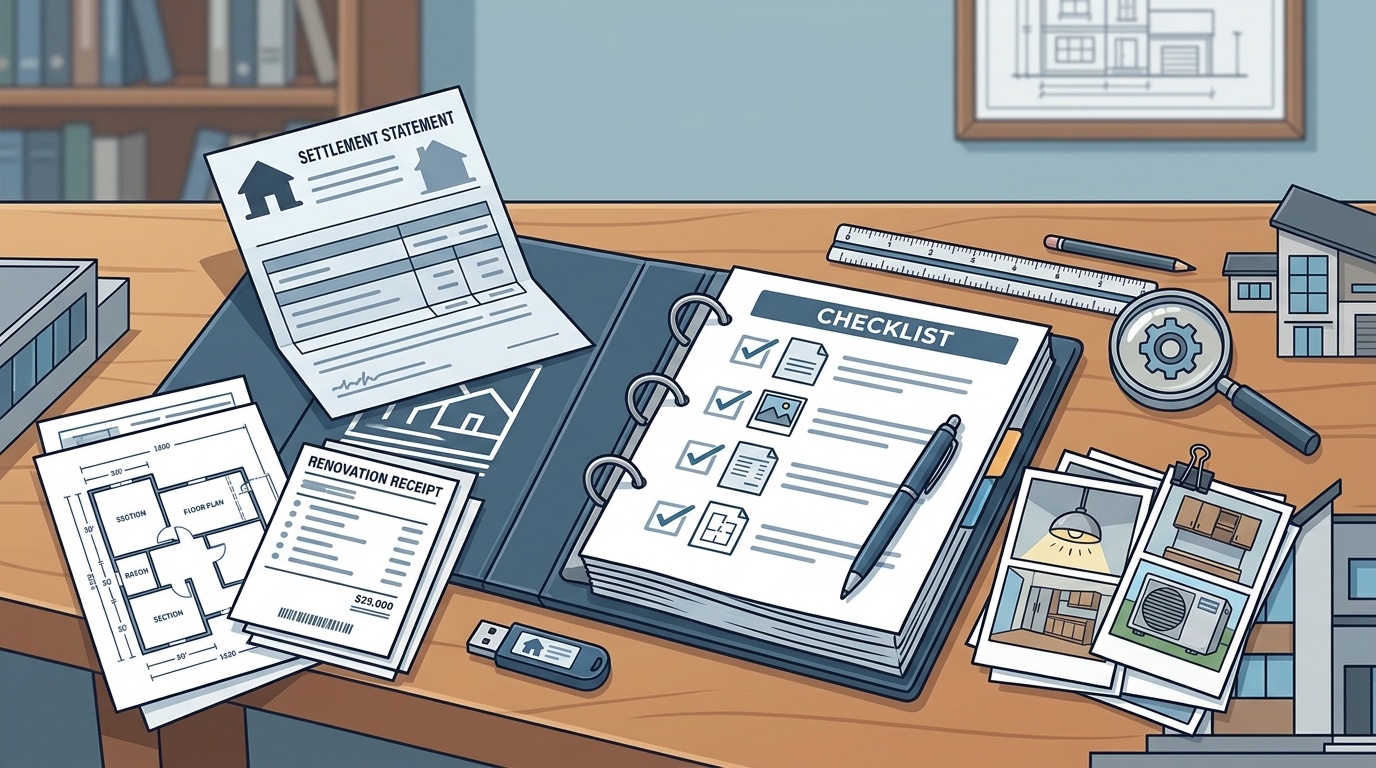
When you are ready to submit your documents, organization is key. Group your files into logical categories: legal documents, photos, renovation records, and reports. Use clear file names that indicate the content of each file. For example, name a photo file "Kitchen_Cabinets_CloseUp.jpg" and a receipt file "Kitchen_Removal_Invoice_2024.pdf." This makes it easier for the study team to process your submission and reduces the chance of errors.
Ensure that all digital files are in a standard format, such as PDF or JPEG. Avoid using obscure file types that may not be compatible with the submission platform. If you have a large number of photos, consider creating a zip file to simplify the upload process. The goal is to provide a complete and organized package that allows the specialists to work efficiently.
A well-organized submission can speed up the review process. It shows that you are serious about the study and have taken the time to gather the necessary information. This professionalism can lead to a higher quality report and a smoother experience with your tax preparer. Taking the time to organize your documents is a small investment that can yield significant returns in terms of accuracy and efficiency.
Key Takeaways
- The Closing Disclosure is the most important legal document, as it establishes the total basis of the property.
- Provide clear, detailed photos of every room and exterior feature to support asset classification.
- Keep all renovation receipts and invoices to document improvements made after purchase.
- Appraisal and inspection reports can add professional validation to your cost allocations.
- Organize your files into logical categories with clear names to speed up the review process.
- Accurate documentation is essential for a defensible study that can withstand IRS scrutiny.
Frequently Asked Questions
Do I need a professional appraisal for a cost segregation study?
No, a professional appraisal is not strictly required, but it can be helpful. The study team can work with the Closing Disclosure and photos to determine the value of the components. However, an appraisal can provide a more detailed breakdown of the property's value, which may improve the accuracy of the study.
What if I lost my closing documents?
If you lost your closing documents, contact your title company or lender to request copies. They are required to keep records of the transaction. If you cannot obtain the original documents, the study team may need to use alternative methods to estimate the basis, which could affect the accuracy of the report.
How many photos should I provide?
There is no specific number, but you should provide enough photos to show every room and exterior feature. Aim for a comprehensive set that covers all major assets. More photos generally lead to a more accurate study, as they allow the specialists to see the details of each component.
Can I use photos from my rental listing?
Yes, you can use photos from your rental listing, but professional photos are preferred. Listing photos are often high-quality and show the property in its best light. However, ensure that the photos are recent and accurately represent the current condition of the property.
What if I made DIY improvements?
If you made DIY improvements, keep receipts for all materials purchased. You do not need to document your labor, as you cannot deduct your own labor costs. However, the cost of materials can be added to the basis of the property and depreciated. Provide clear receipts that list the specific items purchased.
How long does it take to gather all the paperwork?
The time it takes to gather paperwork varies depending on the complexity of the property. For a simple single-family home, it may take a few days. For a property with extensive renovations, it may take longer. Start by gathering the core legal documents, then work on the photos and renovation records.
Next Steps
Gathering the right paperwork is the first step toward maximizing your tax savings. Once you have your documents organized, you can submit them for a cost segregation study. RentalWriteOff provides a streamlined process for submitting your documents and receiving a comprehensive report. To get started, visit the Start Your Cost Segregation Study page to begin your intake. Our team will guide you through the process and ensure that your study is built on a solid foundation of accurate documentation.