

Receiving an IRS notice questioning your depreciation deductions can feel like a crisis, but a structured response is your strongest defense. Depreciation defense is the process of validating and substantiating your asset allocations to the IRS. Most audits focus on whether your cost segregation study aligns with IRS guidelines and whether your documentation supports the reclassified assets. By preparing a clear, evidence-based response, you can resolve inquiries efficiently and protect your tax position. RentalWriteOff specializes in providing the documentation and audit support needed to navigate these interactions with confidence.
1. Review the IRS Notice and Identify the Specific Issues
Read the notice carefully to understand exactly what the IRS is questioning. The letter will specify which years, assets, or depreciation methods are under review. Do not assume the entire study is invalid; often, the inquiry targets specific components or the methodology used for allocation. Identifying the precise scope of the audit allows you to focus your energy on the relevant issues rather than preparing a generic defense for the entire property.
2. Gather Your Original Cost Segregation Study and Supporting Documentation
Assemble the complete study report, including the asset itemization and depreciation schedules. You should also collect the original purchase documents, closing disclosures, and any renovation receipts that were used to build the study. A cost segregation study is an engineering-based analysis that identifies components of a property for accelerated depreciation. Having the primary source documents ready demonstrates that your allocations were based on factual data rather than estimates. If you used a professional service, request a copy of the final report and any correspondence from the provider.
3. Verify Asset Classification Against IRS Guidelines
Confirm that each reclassified asset falls under the correct MACRS recovery period. The IRS uses the Modified Accelerated Cost Recovery System (MACRS) to determine how long an asset can be depreciated. Ensure that items like flooring, cabinetry, and landscaping are correctly categorized into 5, 7, or 15-year schedules where applicable. Misclassification is a common trigger for audit adjustments, so a quick review against IRS Publication 946 can help you spot and correct any errors before responding to the agency.
4. Prepare a Clear and Concise Written Response
Draft a formal letter that addresses each point raised in the IRS notice. Keep the tone professional and factual. For each questioned asset, provide a brief explanation of why it was reclassified and reference the specific section of the study that supports the allocation. Avoid emotional language or overly complex technical jargon that might confuse the examiner. A well-organized response shows that you are cooperative and have a solid understanding of your tax position.
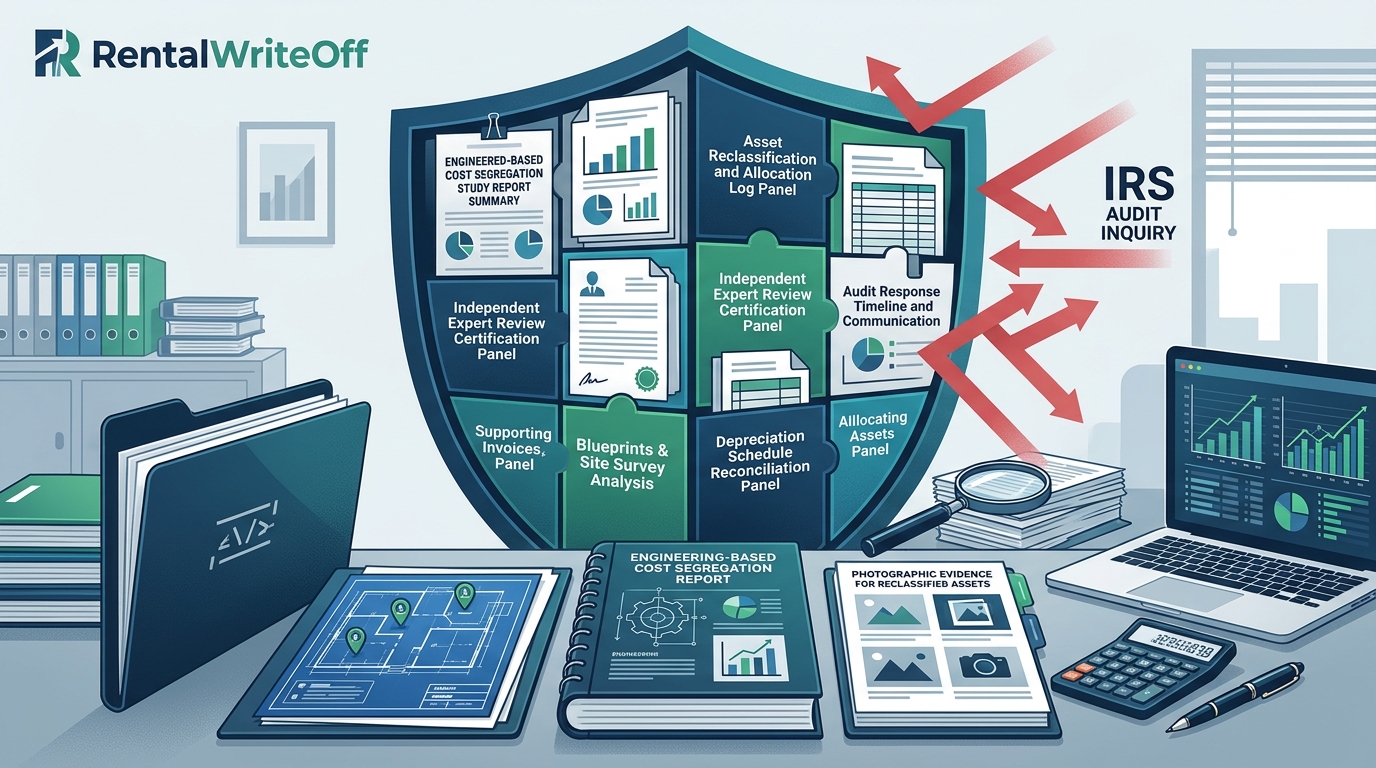
5. Provide Photographic and Physical Evidence of Assets
Include photos or descriptions that prove the existence and condition of the reclassified assets. If the study was completed remotely, you may need to provide additional photos taken at the time of the audit to confirm that the assets are still in place. For example, if you reclassified a specific type of flooring or lighting fixture, a current photo can verify that the asset was present and used in the rental activity. This physical evidence bridges the gap between the paper study and the actual property.
6. Consult with a Tax Professional or Audit Support Provider
Engage a qualified tax professional to review your response before submission. If you used a cost segregation provider that offers audit support, contact them immediately. Many providers, including RentalWriteOff, include audit support in their service packages, which means their specialists can help you respond to IRS inquiries. Audit support is a service where the study provider assists the taxpayer in responding to IRS questions regarding the study's methodology. Leveraging this expertise can significantly reduce the stress and time required to resolve the audit.
7. Consider an Amended Return or Form 3115 if Errors Are Found
If the audit reveals that your original study contained errors, evaluate whether an amended return or Form 3115 is necessary. Form 3115 is used to request a change in accounting method, which can allow you to catch up on missed depreciation without amending prior returns. This option is often available for eligible look-back studies and can be a powerful tool for correcting past mistakes. Discuss this option with your CPA to determine if it is the best course of action for your specific situation.
Choosing the Right Defense Strategy
The best defense strategy depends on the complexity of the audit and the quality of your original documentation. If your study was prepared by a reputable provider with strong audit support, you may be able to resolve the issue with a simple written response. If the study was DIY or lacks detailed documentation, you may need to invest in a new, expert-reviewed study to rebuild your case. Always prioritize clarity and accuracy in your communications with the IRS.
Frequently Asked Questions
What is the first thing I should do when I receive an IRS audit notice?
Read the notice carefully to understand the specific issues being questioned and the deadline for your response. Do not ignore the notice, as failing to respond can lead to penalties and further enforcement actions.
Does RentalWriteOff provide audit support for cost segregation studies?
Yes, RentalWriteOff includes audit support in its service packages. Their specialists can help you respond to IRS inquiries regarding the methodology and calculations in your study.
Can I defend my depreciation claims without a cost segregation study?
It is possible, but it is more difficult. Without a formal study, you must rely on your own documentation and knowledge of IRS guidelines. A professional study provides a structured framework that is easier to defend in an audit.
What is Form 3115 and when is it used?
Form 3115 is used to request a change in accounting method. It allows taxpayers to catch up on missed depreciation from prior years without amending each individual return. It is often used in conjunction with cost segregation studies.
How long does an IRS audit for depreciation usually take?
The timeline varies depending on the complexity of the case and the IRS's workload. Simple inquiries may be resolved in a few weeks, while more complex audits can take several months. Providing a complete and clear response can help expedite the process.
Is it worth hiring a tax attorney for a depreciation audit?
For most residential rental property audits, a CPA or tax professional with experience in cost segregation is sufficient. A tax attorney may be necessary if the audit escalates to litigation or if there are significant legal disputes regarding the property's use.