

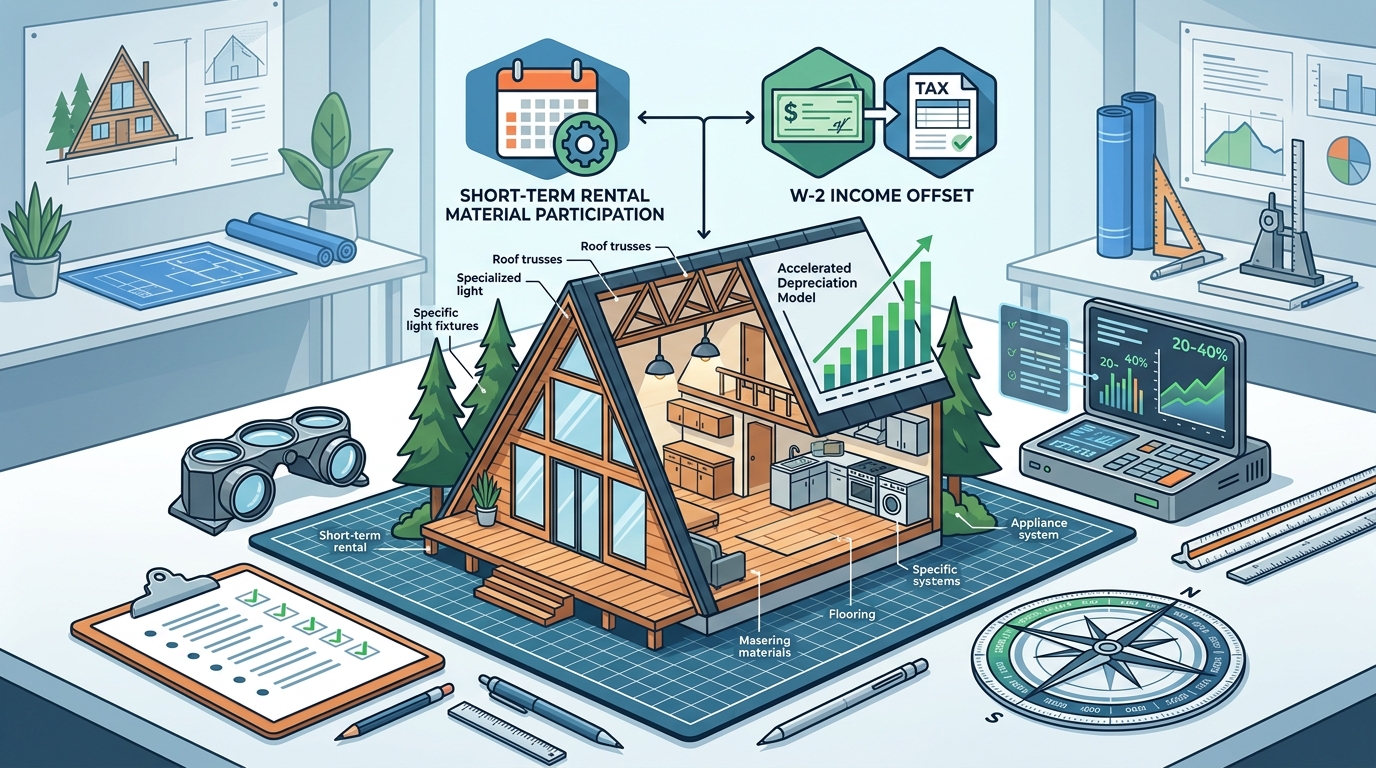
Short-term rental owners face a unique tax landscape where standard depreciation rules often leave significant cash on the table. According to recent industry data, cost segregation studies can accelerate depreciation deductions by 20 to 40 percent in the first year for qualified properties. This acceleration is not merely a bookkeeping adjustment but a strategic lever that can offset W-2 income if specific material participation rules are met. Selecting the right service provider requires looking beyond price tags to understand engineering rigor, IRS compliance, and specialized knowledge of short-term rental nuances. (About RentalWriteOff Cost Segregation)
What Is Cost Segregation?
Cost segregation is a specialized accounting technique that identifies and reclassifies components of a building from the standard 27.5-year residential rental depreciation schedule to shorter asset classes. These shorter classes include 5-year, 7-year, and 15-year property categories. By accelerating the depreciation timeline, property owners can claim larger deductions in the early years of ownership. (Cost Segregation Studies for)
Cost segregation is the process of breaking down a property's cost basis into components with shorter useful lives for tax purposes. This reclassification allows for accelerated depreciation, which reduces taxable income significantly in the initial years after acquisition or substantial improvement. (Cost Segregation Studies for)
The IRS recognizes this method through the Internal Revenue Service guidelines on depreciation. However, the complexity lies in correctly identifying which components qualify for shorter lives and assigning defensible values to them. This is where the quality of the service provider becomes critical.
Why STRs Need Specialized Analysis
Short-term rentals (STRs) operate under different tax rules than long-term residential rentals. The distinction often hinges on the average length of stay. If the average stay is seven days or less, the property may not be treated as a rental activity under IRS rules. This classification can allow depreciation deductions to offset non-rental income, such as W-2 wages, provided material participation requirements are met.
STRs typically contain a higher volume of personal property than long-term rentals. Furnishings, appliances, decor, electronics, and specialized amenities like hot tubs or game rooms are common. These items often qualify for 5-year or 7-year depreciation schedules. A standard cost segregation study might overlook these items or undervalue them because they are not structural.
Specialized providers understand the IRS cost segregation regulations as they apply to furnished properties. They know how to document the presence and value of these items using photos, invoices, and engineering estimates. This attention to detail can result in significantly higher accelerated deductions for STR owners compared to traditional studies.
Key Evaluation Criteria for Providers
When evaluating cost segregation services, focus on these core areas to ensure you receive a defensible and valuable report.
1. Engineering-Based Methodology
Not all studies are created equal. The most credible reports are built on engineering-based methodologies rather than generic percentage allocations. Engineering studies involve a detailed analysis of the property's components, often using photos, floor plans, and construction data. This approach provides a higher level of accuracy and defensibility in the event of an IRS audit.
Look for providers who explicitly state they use an engineering-based approach. This means they analyze specific assets like flooring, cabinetry, and landscaping rather than applying a blanket percentage to the total cost. This precision is crucial for maximizing deductions on high-value personal property items common in STRs.
2. IRS Compliance and Documentation
The report must align with the IRS Audit Techniques Guide for cost segregation. This guide outlines the standards auditors use to review these studies. A compliant report includes detailed schedules, statements of methodology, and clear citations of applicable IRS regulations.
Ask the provider about their quality control process. Do they have a final review step before delivery? Is the report vetted by CPAs or tax attorneys? These safeguards indicate a commitment to compliance and reduce the risk of disallowed deductions during an audit.
3. Turnaround Time and Accessibility
3. Turnaround Time and AccessibilitySpeed matters in real estate. You need the report in time to file your taxes or adjust your withholding. Traditional firms may take weeks or months to deliver a study. Modern providers offer faster turnaround times, often within two business days for standard residential properties.
Fast delivery does not mean compromised quality. Look for providers who have streamlined their intake and analysis processes. This efficiency allows them to serve more clients without sacrificing the rigor of their engineering analysis. Quick access to your report means you can plan your tax strategy earlier in the year.
4. Pricing Structure and Transparency
Pricing models vary widely. Some firms charge a percentage of the total property cost, which can be expensive for high-value properties. Others offer flat-rate pricing, which provides cost certainty. Flat-rate pricing is often more affordable for single-family rentals and duplexes.
Ensure the pricing includes all necessary deliverables. Does the fee cover the final report, the itemized CSV, the methodology file, and audit support? Hidden fees can erode the value of the study. Transparent pricing helps you compare providers accurately and budget effectively.
Engineering Methodology vs. Automated Estimates
Understanding the difference between engineering-based studies and automated estimates is vital for making an informed decision.
| Feature | Engineering-Based Study | Automated/Percentage Estimate |
|---|---|---|
| Methodology | Detailed analysis of specific components using photos and data. | Generic percentages applied to total cost based on property type. |
| Accuracy | High. Reflects the actual assets present in the property. | Lower. May over- or under-estimate specific asset values. |
| Audit Defense | Strong. Provides detailed documentation and defensible values. | Weak. Lacks specific evidence for individual asset allocations. |
| Best For | STRs with high-value personal property and complex layouts. | Simple properties with minimal personal property. |
For short-term rentals, the engineering approach is almost always superior. The high volume of personal property in an STR means that generic percentages are likely to miss significant deduction opportunities. An engineering study captures the value of furniture, appliances, and decor that an automated model might ignore.
Comparing Service Models and Deliverables
Different providers offer different levels of service. It is important to understand what you are getting for your investment.
Standard Residential Reports
These reports are designed for single-family rentals, duplexes, and fourplexes. They typically include a comprehensive final report with all necessary schedules, an itemized CSV listing every classified asset, and a complete methodology file. Some providers also include your complete photo set documenting each asset.
Specialized STR Packages
Some providers offer packages tailored specifically for short-term rentals. These may include additional analysis of furnished items, guidance on material participation rules, and support for offsetting non-rental income. If you are running an Airbnb or VRBO, look for providers who understand the unique tax implications of STRs.
Audit Support
Audit support is a critical component of any cost segregation study. If the IRS questions your deductions, you need the provider to stand behind their work. Ensure the service includes audit support, which may involve answering questions from your CPA or providing additional documentation if requested.
Ensuring Audit-Ready Documentation
The IRS scrutinizes cost segregation studies closely. To protect your investment, your report must be audit-ready. This means it must be detailed, accurate, and well-documented.
Audit-ready documentation includes:
- Detailed Schedules: Breakdown of assets by class life (5, 7, 15, 27.5 years).
- Methodology Statement: Explanation of the engineering methods used to allocate costs.
- IRS Citations: References to specific IRS regulations and guidelines.
- Supporting Data: Photos, invoices, and construction records used in the analysis.
Providers who prioritize audit readiness will have a robust quality control process. They will review every report for accuracy and compliance before delivery. This diligence protects you from potential penalties and interest in the event of an audit.
Key Takeaways
- Cost segregation can accelerate depreciation deductions by 20 to 40 percent in the first year for qualified properties.
- Short-term rentals with average stays of seven days or less may offset non-rental income if material participation rules are met.
- Engineering-based studies provide higher accuracy and audit defense compared to automated percentage estimates.
- Look for providers who use the IRS Cost Segregation Audit Techniques Guide as their methodology foundation.
- Flat-rate pricing offers cost certainty and is often more affordable for single-family rentals.
- Fast turnaround times, such as two business days, allow for earlier tax planning without sacrificing quality.
- Audit support is essential to protect your deductions in the event of an IRS review.
Frequently Asked Questions
What is the difference between cost segregation and standard depreciation?
Standard depreciation spreads the cost of a building over 27.5 years. Cost segregation reclassifies certain components into shorter asset classes (5, 7, or 15 years), allowing for accelerated deductions in the early years.
Do short-term rentals qualify for cost segregation?
Yes, short-term rentals qualify. In fact, they often benefit more because they contain more personal property (furniture, appliances) that can be depreciated over shorter lives.
How long does a cost segregation study take?
Traditional firms may take weeks or months. Modern providers like RentalWriteOff can deliver standard residential reports in two business days after complete intake.
Is cost segregation worth the cost?
For most rental owners, yes. The accelerated deductions can significantly reduce taxable income, often resulting in a return on investment that far exceeds the cost of the study.
What if I get audited?
Choose a provider that offers audit support. They will stand behind their report and provide additional documentation or explanation if the IRS questions your deductions.
Can I do a cost segregation study on a property I already own?
Yes, you can do a look-back study on properties acquired in prior years. This allows you to claim missed deductions through a change in accounting method.
Start Your Evaluation
Evaluating cost segregation services requires careful consideration of methodology, compliance, and specialization. For short-term rental owners, choosing a provider that understands the unique tax landscape of STRs is crucial. By prioritizing engineering-based analysis and audit-ready documentation, you can maximize your deductions and protect your investment.
Ready to see your potential savings? Use our Savings Calculator to get an instant estimate based on your property data. Or, start your cost segregation study today and take control of your tax strategy.