

Best Cost Segregation Study Options for Small Rental Properties in 2026
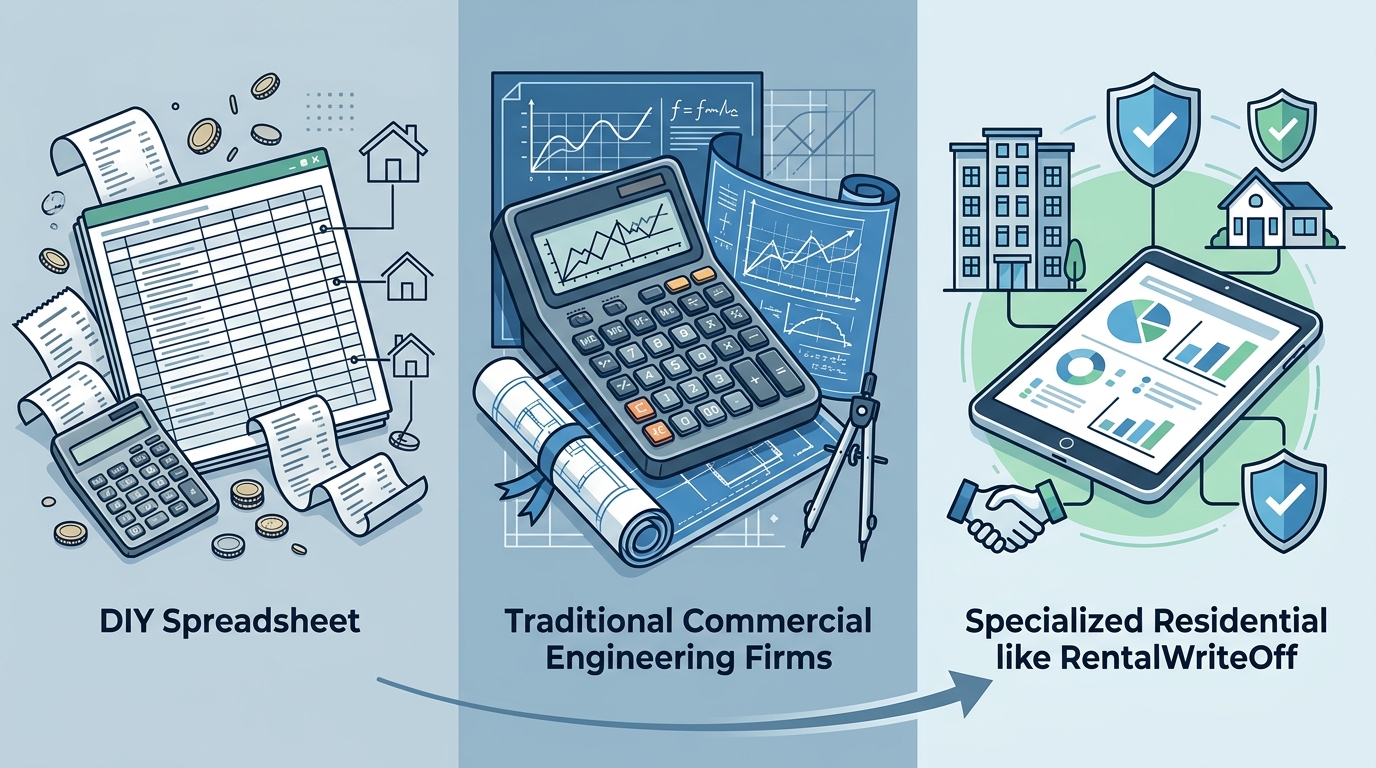
Small rental property owners have three primary cost segregation study options: DIY spreadsheets, commercial engineering firms, and specialized residential platforms. For single-family homes and small multifamily units, specialized platforms offer the best balance of audit defensibility, cost, and speed. This guide covers the audit defensibility tradeoffs of each option, helping you choose the right approach for your portfolio.
Audit Defensibility Tradeoffs
Cost segregation is an IRS-recognized tax strategy that reclassifies parts of a rental property into shorter depreciation schedules. The primary risk of any study is audit scrutiny. The IRS Cost Segregation Audit Techniques Guide outlines specific elements examiners look for, including a detailed asset inventory, clear methodology, and supporting documentation. A study that lacks these elements may be rejected, resulting in lost deductions and potential penalties.
Documentation Requirements
The IRS expects a property-specific analysis, not a generic template. Studies must document the condition, quality, and specific use of each asset. For small properties, this means itemizing individual components like flooring, cabinetry, and appliances. Generic studies that apply average percentages to the total building cost often fail this test. The difference between a defensible study and a rejected one is the depth of the component-level analysis.
Methodology Transparency
A strong study cites the specific IRS regulations and MACRS (Modified Accelerated Cost Recovery System) rules used for each classification. Transparency in methodology allows your CPA to defend the study if questioned. If a study does not explain why an asset was classified as 5-year property instead of 27.5-year property, it is vulnerable to challenge. Look for providers that include a methodology file or clear citations in their reports.
DIY Cost Segregation Options
Do-it-yourself cost segregation involves using spreadsheets or free online tools to allocate your purchase price across asset categories. This option is the most affordable, often costing only your time. However, it carries the highest audit risk. The IRS does not recognize generic percentage allocations as valid cost segregation studies. If you attempt a DIY study, you must build a detailed, property-specific inventory and document the rationale for each classification.
When DIY Makes Sense
Limits of DIY Tools
Many online calculators provide estimates based on ZIP code averages. These are not studies. They do not analyze your specific property. Using a ZIP code average as a basis for a tax deduction is a red flag for the IRS. A valid study requires an analysis of the actual assets in your property, including their condition and quality. DIY tools cannot perform this level of detail without manual input of every component.
Commercial Engineering Firms
Site Visit Requirements
Many commercial firms require an on-site inspection to verify asset conditions. This adds time and cost. For small properties, the travel and labor costs for a site visit can exceed the value of the study. Some firms offer remote studies, but they may still require extensive photo documentation and interviews. The process can take weeks or months, delaying your tax filing.
Scalability Issues
Commercial firms often have minimum project sizes. They may not accept single-family homes or small duplexes. This leaves small property owners without access to high-quality studies. If you do hire a commercial firm, ensure they have experience with residential properties. Their methodology may be tailored for office buildings or hotels, which does not translate well to residential rentals.
Specialized Residential Platforms
Specialized platforms like RentalWriteOff focus exclusively on residential rental properties. They use a remote, technology-assisted process to deliver studies quickly and at a lower cost. These platforms are designed for the small property owner, offering flat-fee pricing and fast turnaround times. They provide the audit defensibility of a professional study without the overhead of a commercial firm.
Remote Analysis Process
Specialized platforms use photos, public records, and satellite imagery to analyze your property. This eliminates the need for a site visit. The process is fully remote, allowing you to submit your property details and receive a study in days. The analysis is performed by cost segregation experts who review the documentation and classify each asset. This approach is efficient and scalable for small properties.
Cost and Turnaround
Specialized platforms typically offer flat-fee pricing, making the cost predictable. For residential properties, fees are significantly lower than commercial firms. Turnaround times are also faster, often delivering reports within two business days of complete intake. This speed allows you to file your taxes on time and take advantage of accelerated deductions in the current year. The lower cost and faster delivery make these platforms the most practical option for most small rental property owners.
Option Comparison Table
| Option | Typical Cost | Turnaround Time | Audit Defensibility | Best For |
|---|---|---|---|---|
| Specialized Residential Platform | Flat Fee (Lower than commercial) | 2 Business Days | High | Single-family, small multifamily, STRs |
Key Takeaways
- Cost segregation is an IRS-recognized strategy that accelerates depreciation on rental property components.
- Audit defensibility depends on property-specific analysis, not generic percentage allocations.
- DIY studies carry high audit risk and are only suitable for low-basis properties.
- Commercial engineering firms are highly defensible but often too expensive for small properties.
- Specialized residential platforms offer the best balance of cost, speed, and defensibility for small rentals.
- Remote analysis using photos and public records is a valid and efficient method for small properties.
- Always have your CPA review the study before filing to ensure compliance with your specific tax situation.
- The 2026 tax environment, with 100% bonus depreciation for qualifying property, makes cost segregation more valuable than ever.
Frequently Asked Questions
What is a cost segregation study?
A cost segregation study is an engineering-based analysis that identifies components of a rental property that can be depreciated faster than the standard 27.5 years. It reclassifies items like flooring, cabinetry, and appliances into 5-, 7-, or 15-year recovery periods.
Is a DIY cost segregation study IRS-compliant?
A DIY study can be IRS-compliant if it includes a detailed, property-specific inventory and clear methodology. However, generic percentage allocations are not compliant. The IRS expects a study that analyzes the actual assets in your property.
How much does a cost segregation study cost for a small rental?
Do I need a site visit for a cost segregation study?
No. Many specialized platforms use remote analysis with photos, public records, and satellite imagery. This is a valid method for small properties and eliminates the cost and time of a site visit.
What is the difference between a study and a calculator?
A calculator provides an estimate based on averages. A study is a detailed, property-specific analysis that documents each asset and its classification. Only a study is defensible in an audit.
Can I use a cost segregation study for a short-term rental?
Yes. Short-term rentals qualify for cost segregation. If the average stay is 7 days or less and you materially participate, the resulting loss may offset non-rental income. This makes cost segregation especially powerful for Airbnb and VRBO hosts.
How long does it take to get a cost segregation study?
Turnaround times vary. DIY can take days to weeks. Commercial firms may take weeks to months. Specialized platforms often deliver reports within two business days of complete intake.
What documents do I need for a cost segregation study?
You typically need the property address, purchase price, closing date, and photos. Providing appraisals, renovation receipts, and inspection reports can improve the accuracy of the study. The more documentation you provide, the better the analysis.
Conclusion
Choosing the right cost segregation study option depends on your property size, basis, and risk tolerance. For small rental properties, specialized residential platforms offer the best combination of audit defensibility, cost, and speed. They provide the professional quality needed to withstand IRS scrutiny without the high fees of commercial firms. If you are a small property owner looking to maximize your tax savings, consider a study from a specialized platform like RentalWriteOff. Their remote, expert-reviewed process is designed specifically for residential rentals, making it an accessible and effective option for 2026.