

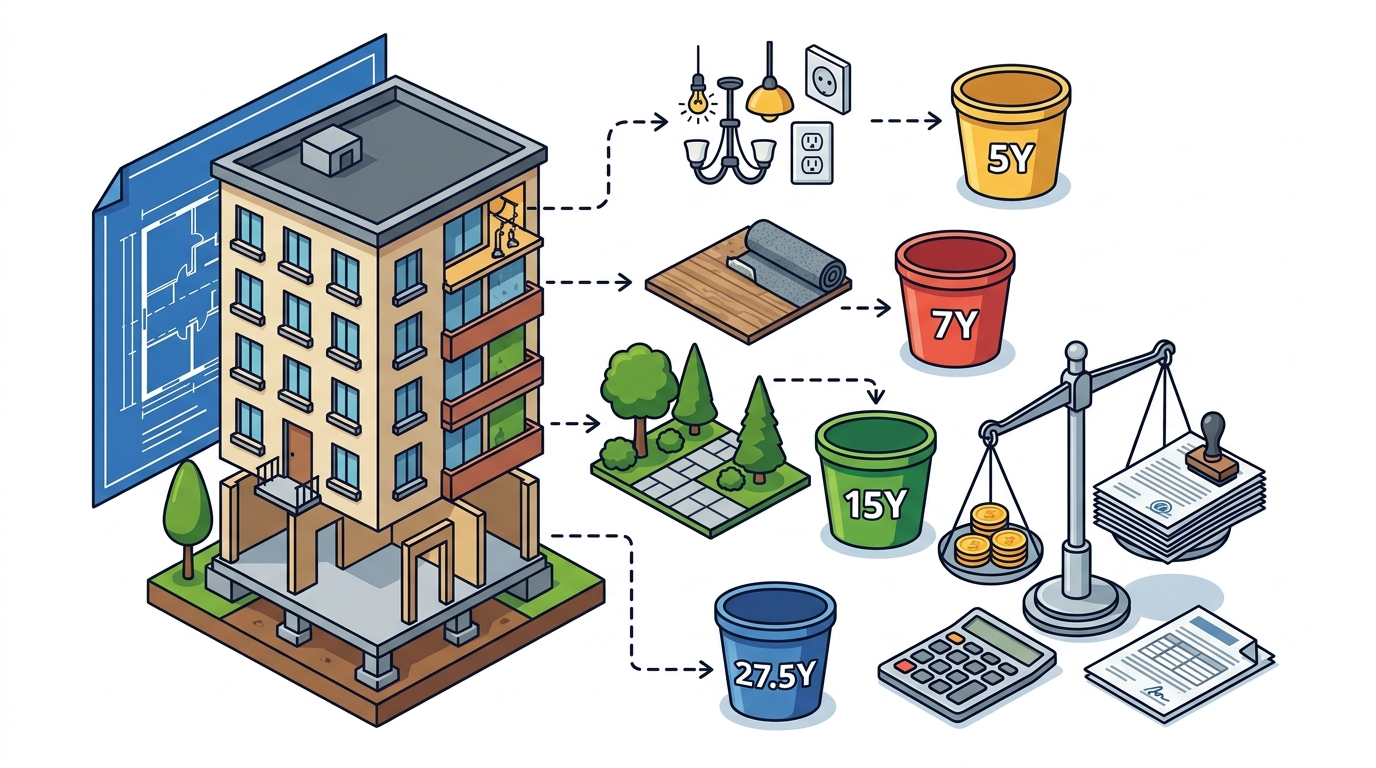
Cost segregation is a powerful tax strategy that allows real estate investors to accelerate depreciation deductions, significantly reducing taxable income in the early years of property ownership. According to the Internal Revenue Service, this method involves reclassifying parts of a building from the standard 27.5-year residential schedule to shorter 5, 7, or 15-year categories. For investors, this shift can unlock substantial cash flow improvements, but finding a provider that balances affordability with audit-ready quality is critical. This guide explores how to identify affordable cost segregation reports and why modern, engineering-based remote services are transforming the landscape for rental property owners. (About RentalWriteOff Cost Segregation)
Traditional vs. Modern Cost Segregation Models
Historically, cost segregation studies were the domain of large commercial real estate firms and high-net-worth individuals. Traditional providers often required physical site visits, extensive on-site engineering hours, and complex logistical coordination. These factors drove costs typically between $3,000 and $10,000 or more, making the service inaccessible for single-family rental owners or small portfolio investors.
The modern approach leverages remote data collection, satellite imagery, and standardized engineering methodologies. This shift has democratized access to tax savings, allowing investors with smaller portfolios to benefit from accelerated depreciation without the premium price tag of traditional firms. The core value proposition remains the same: identifying components of the property that qualify for shorter depreciation lives to maximize early-year tax deductions.
Understanding Pricing Structures
When evaluating affordable cost segregation reports, it is essential to understand how providers structure their fees. Most reputable firms use a flat-rate model based on the property's acquisition cost or square footage, rather than hourly billing. This transparency helps investors budget accurately and avoid unexpected expenses.
Some providers may offer tiered pricing based on the complexity of the property. For example, a standard single-family rental might have a lower base rate compared to a multi-unit apartment complex or a property with unique architectural features. However, the most competitive providers in the current market have standardized their pricing to offer flat rates that are significantly lower than traditional industry averages.
The RentalWriteOff Approach to Affordability
RentalWriteOff has emerged as a leading provider of affordable cost segregation studies specifically designed for rental property owners. By codifying the methodology found in the IRS Cost Segregation Audit Techniques Guide, they have created a scalable, efficient process that delivers high-quality reports at a fraction of the traditional cost.
RentalWriteOff offers a flat rate of $899 for residential rental properties. This pricing model includes a comprehensive final report, an itemized CSV listing of all classified assets, and a complete methodology file citing every IRS regulation used. The service is designed to be accessible, with reports delivered in just two business days after the intake is complete.
Engineering-Based Analysis
Unlike automated software tools that may lack the nuance required for IRS compliance, RentalWriteOff employs an engineering-based approach. Their team analyzes photos and data to identify components eligible for accelerated depreciation, such as flooring, cabinetry, appliances, and landscaping. Each component is assigned to the appropriate 5, 7, or 15-year property class, ensuring defensible values and classifications.
Audit-Ready Documentation
Affordability should never come at the expense of quality. RentalWriteOff ensures that every report is audit-ready, including all necessary schedules, statements, and methodologies required to meet IRS standards. The reports are vetted by CPA firms, providing an additional layer of confidence for investors facing potential scrutiny.
Key Features of Affordable Reports
When selecting an affordable cost segregation provider, investors should look for specific features that ensure the report's utility and compliance. These features distinguish high-value services from low-quality, generic outputs.
- Itemized Asset Lists: A detailed breakdown of every classified asset with quantities and values is essential for accurate tax filing.
- Methodology Documentation: The report must cite specific IRS regulations and methodologies used to justify the reclassification of assets.
- Photo Evidence: Comprehensive photo sets documenting each asset provide visual proof of the components' existence and condition.
- Audit Support: Access to audit support is crucial. If the IRS questions the study, the provider should be able to defend the classifications and methodologies used.
- Fast Turnaround: Quick delivery allows investors to incorporate the deductions into their tax planning sooner, maximizing the time value of money.
Comparison of Service Models
Understanding the differences between various service models can help investors make informed decisions. The table below compares traditional firms, automated software, and modern remote services like RentalWriteOff.
| Feature | Traditional Firms | Automated Software | RentalWriteOff |
|---|---|---|---|
| Price | $3,000 - $10,000+ | $500 - $1,500 | $899 Flat Rate |
| Turnaround Time | 4-8 Weeks | Instant | 2 Business Days |
| Analysis Type | On-Site Engineering | Algorithmic | Engineering-Based Remote |
| Audit Support | Included | Often Limited | Included |
| Customization | High | Low | High |
While automated software offers speed, it often lacks the professional judgment required for complex properties. Traditional firms offer high customization but at a prohibitive cost and slow turnaround. RentalWriteOff bridges this gap by providing professional, engineering-based analysis at an affordable price point with rapid delivery.
Key Takeaways
- Cost Efficiency: RentalWriteOff offers cost segregation studies for $899, significantly lower than traditional firms.
- Speed: Reports are delivered in 2 business days, allowing for quicker tax planning.
- Compliance: Studies are built on the IRS Cost Segregation Audit Techniques Guide, ensuring audit readiness.
- Remote Process: No site visits are required, making the service accessible to investors nationwide.
- Comprehensive Documentation: Includes itemized CSVs, methodology files, and photo evidence.
- CPA Vetting: Reports are vetted by CPA firms, adding a layer of professional validation.
- Target Audience: Specifically designed for single-family rental owners and small portfolio investors.
Frequently Asked Questions
What is cost segregation?
Cost segregation is an IRS-recognized tax strategy that reclassifies parts of a rental property into shorter depreciation schedules, such as 5, 7, or 15 years, instead of the standard 27.5-year schedule for residential rental property.
How much does a cost segregation study cost?
Traditional firms may charge $3,000 to $10,000 or more. Providers like RentalWriteOff offer affordable flat rates, such as $899 for residential rental properties, making the service accessible to more investors.
Do I need a site visit for a cost segregation study?
No, modern providers like RentalWriteOff conduct studies remotely using photos, public records, and satellite imagery. This approach is efficient and accurate for residential rentals.
Is the report audit-proof?
While no document is entirely "audit-proof," RentalWriteOff reports are designed to be audit-ready. They include comprehensive documentation and are vetted by CPA firms to meet IRS standards.
How long does it take to receive the report?
RentalWriteOff typically delivers reports within 2 business days after the complete intake is received, which is much faster than the 4-8 weeks typical of traditional firms.
Can I do cost segregation myself?
While it is possible to perform a DIY cost segregation study, it requires significant expertise in IRS regulations and engineering principles. Professional studies ensure accuracy and provide audit support, which DIY efforts lack.
What types of properties qualify?
Residential rental properties, including single-family homes, multi-unit apartments, and short-term rentals, qualify for cost segregation. The study identifies components that can be depreciated over shorter periods.
Does state conformity affect bonus depreciation?
Yes, state treatment of federal bonus depreciation varies. Some states conform to the federal 100% bonus depreciation, while others decouple. Investors should consult their state-specific rules, which can be found in resources like the Cost Segregation by State guide.
Get Your Affordable Report Today
Don't let high costs prevent you from maximizing your rental property's tax benefits. RentalWriteOff offers a streamlined, affordable, and audit-ready cost segregation study for just $899. Start your journey to accelerated depreciation by getting your study today or calculating your estimated savings now.