

Cost Segregation for Rental Properties: Accelerate Your Tax Deductions
Cost segregation is a strategic tax planning tool that allows rental property owners to accelerate depreciation deductions by reclassifying certain property components into shorter recovery periods. According to the Internal Revenue Service, this method breaks down a building into its individual components, allowing investors to deduct costs much faster than the standard 27.5-year schedule for residential rental properties. This acceleration can result in significant cash flow improvements, especially when combined with bonus depreciation provisions available in recent tax years. (Cost Segregation Studies for)
What Is Cost Segregation?
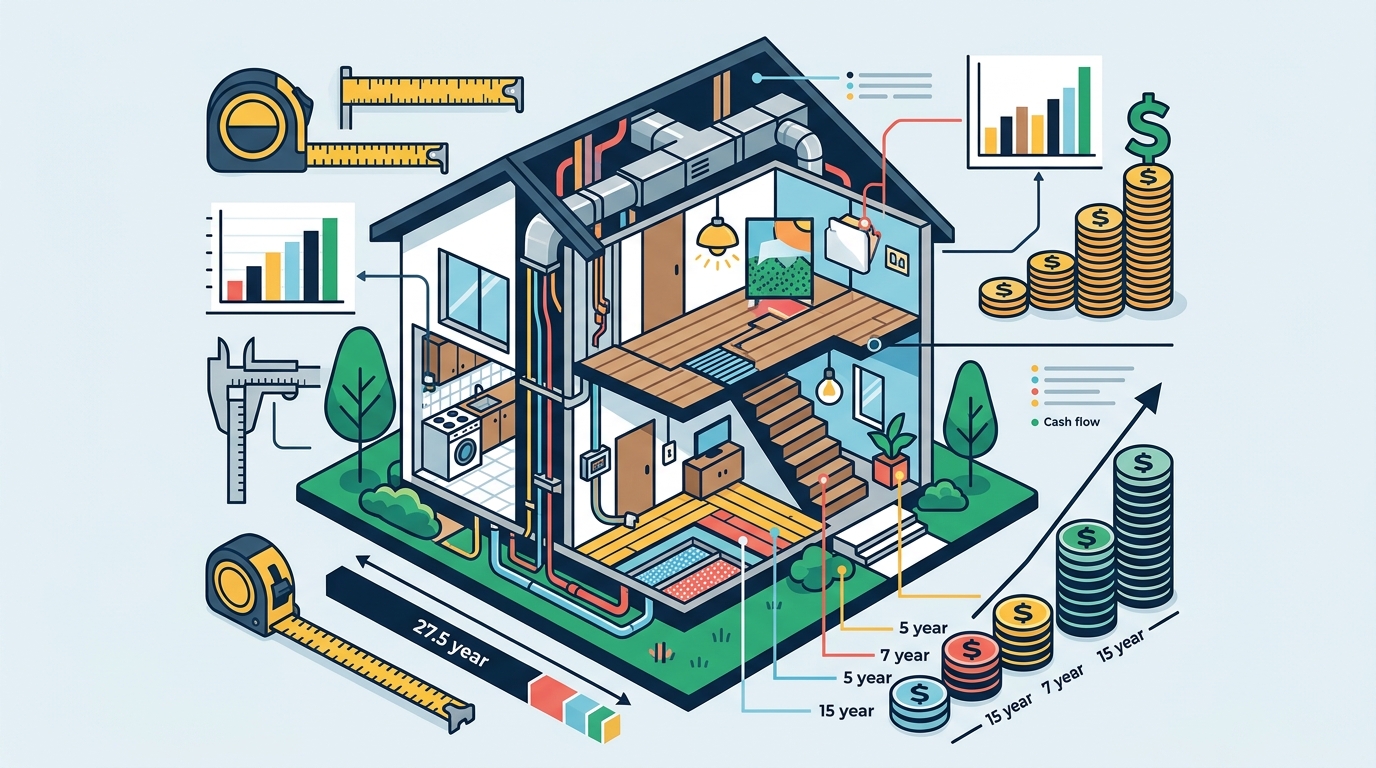
Cost segregation is a method of reclassifying assets from the standard 27.5-year depreciation period for residential rental buildings into shorter asset classes of 5, 7, or 15 years. This process is grounded in the IRS Cost Segregation Audit Techniques Guide, which provides the framework for identifying components that do not contribute to the structural integrity of the building. (Cost Segregation FAQ for)
By identifying these non-structural elements, property owners can claim larger deductions in the early years of ownership. This is particularly powerful for investors who have high taxable income from other sources, as it can offset that income with rental losses. The core principle is that not all parts of a building should be depreciated at the same rate. For example, carpeting and lighting fixtures are distinct from the foundation and roof. (Rental Property Tax Strategy)
Cost segregation is the practice of identifying and reclassifying property components to accelerate depreciation deductions for tax purposes. This strategy is widely used by real estate investors to improve cash flow and reduce current tax liabilities.
How the Process Works
Implementing a cost segregation study involves a detailed engineering-based analysis of the property. The process begins with gathering all relevant data, including purchase agreements, closing statements, and construction records. For existing properties, a physical inspection is often required to identify specific components.
Identifying Eligible Components
Engineers and tax professionals analyze the property to identify assets that qualify for shorter depreciation lives. These typically include:
- 5-Year Property: Carpeting, flooring, lighting fixtures, and certain appliances.
- 7-Year Property: Cabinetry, landscaping equipment, and certain machinery.
- 15-Year Property: Landscaping, driveways, fencing, and parking lots.
These components are separated from the building's structure, which remains on the 27.5-year schedule. The value assigned to each component must be defensible and supported by documentation. This ensures that the study withstands potential IRS scrutiny.
Documentation and Reporting
Once the analysis is complete, a comprehensive report is generated. This report includes detailed schedules, methodologies, and supporting documentation. It serves as the primary record for tax filings and audit defense. The report must clearly link each reclassified asset to specific IRS regulations to ensure compliance.
Benefits for Short-Term Rentals
Short-term rental (STR) owners often find cost segregation particularly beneficial due to the unique tax treatment of their activities. The IRS distinguishes between rental activity and trade or business based on the average length of stay. If the average stay is seven days or less, the activity may not be treated as a rental activity.
Offsetting Non-Rental Income
For STR owners who materially participate in the operation of the property, depreciation deductions from cost segregation can offset W-2 income and other non-rental business income. This is a significant advantage over long-term rental owners, who are generally limited to offsetting only rental income. This distinction can lead to substantial tax savings for active hosts.
Enhanced Deductions for Furnished Units
STRs are typically furnished with furniture, decor, and electronics. These items often qualify for shorter depreciation periods under cost segregation. By reclassifying these assets, owners can accelerate deductions on items that would otherwise be depreciated over a longer period or expensed immediately under different rules.
Cost segregation is a strategic tax planning tool that allows rental property owners to accelerate depreciation deductions by reclassifying certain property components into shorter recovery periods.
Long-Term Rental Advantages
While the benefits for STRs are unique, long-term rental owners also gain significant advantages from cost segregation. The primary benefit is the acceleration of depreciation deductions, which improves cash flow in the early years of ownership.
Improved Cash Flow
By deducting more expenses in the early years, investors can reduce their taxable income significantly. This reduction in tax liability frees up capital that can be reinvested into other properties or used to pay down debt. The impact is most pronounced in the first five to ten years of ownership.
Audit Support and Compliance
Professional cost segregation studies provide robust audit support. The documentation included in the report helps defend the reclassification of assets against IRS challenges. This is crucial for maintaining compliance and avoiding penalties associated with incorrect depreciation claims.
Cost Segregation vs. Standard Depreciation
Understanding the difference between cost segregation and standard depreciation is key to evaluating its value. Standard depreciation spreads the cost of a building evenly over 27.5 years. Cost segregation front-loads these deductions by identifying components that wear out faster.
| Feature | Standard Depreciation | Cost Segregation |
|---|---|---|
| Recovery Period | 27.5 years for residential | 5, 7, or 15 years for components |
| Deduction Timing | Evenly spread over time | Accelerated in early years |
| Complexity | Low, automated calculation | High, requires engineering analysis |
| Tax Impact | Modest annual deduction | Significant early-year tax savings |
| Audit Risk | Low | Managed with proper documentation |
The choice between the two methods depends on the investor's financial goals. Those seeking immediate tax relief and improved cash flow often prefer cost segregation. Others may opt for standard depreciation for its simplicity.
Key Takeaways
- Cost segregation reclassifies property components into 5, 7, or 15-year asset classes for faster depreciation.
- Short-term rental owners can use these deductions to offset non-rental income if they materially participate.
- The process requires an engineering-based analysis to identify eligible non-structural components.
- Proper documentation is essential for IRS compliance and audit defense.
- Accelerated deductions improve early-year cash flow and reduce current tax liabilities.
- Standard residential depreciation remains at 27.5 years for the building structure.
- Professional studies provide defensible valuations and clear methodology citations.
Frequently Asked Questions
Who qualifies for a cost segregation study?
Any owner of residential or commercial rental property can benefit from a cost segregation study. It is particularly valuable for properties acquired or placed in service after 1987.
How much does a cost segregation study cost?
The cost varies based on the size and complexity of the property. However, streamlined services like those offered by RentalWriteOff provide affordable options starting at flat rates for residential properties.
Can I do a cost segregation study on an existing property?
Yes, you can perform a cost segregation study on a property you already own. You may need to file Form 3115 to change your accounting method retroactively.
What is the difference between 5-year and 7-year property?
Five-year property typically includes personal property like carpeting and appliances. Seven-year property often includes certain fixtures and equipment that do not fall into the 5-year or 15-year categories.
Does cost segregation affect my capital gains tax?
Yes, accelerated depreciation can increase your taxable gain when you sell the property due to depreciation recapture. However, the time value of money often makes the early tax savings more valuable than the future tax liability.
How long does the process take?
Traditional studies can take weeks or months. Modern digital platforms can deliver reports in as little as two business days, as highlighted in RentalWriteOff's service model.
Is cost segregation audit-proof?
While no tax strategy is entirely immune to audit, a professionally prepared study with robust documentation significantly reduces risk and provides strong defense against IRS challenges.
Start Your Cost Segregation Study
Unlock the full tax potential of your rental property today. Whether you own a single-family home, a duplex, or a short-term rental, cost segregation can provide immediate financial benefits. Get your instant estimate and start saving on taxes now by visiting RentalWriteOff.com.