

Cost segregation is an IRS-recognized depreciation method that accelerates tax deductions by reclassifying certain property components into shorter recovery periods. For rental property owners, this strategy can unlock significant cash flow by reducing current-year taxable income. Recent industry data indicates that strategic cost segregation can yield immediate tax savings exceeding 10% of the property's acquisition cost in the first year alone. This guide details how pricing models work, how to calculate your return on investment, and why modern engineering-based studies offer superior value for residential landlords. (About RentalWriteOff Cost Segregation)
What Is Cost Segregation?
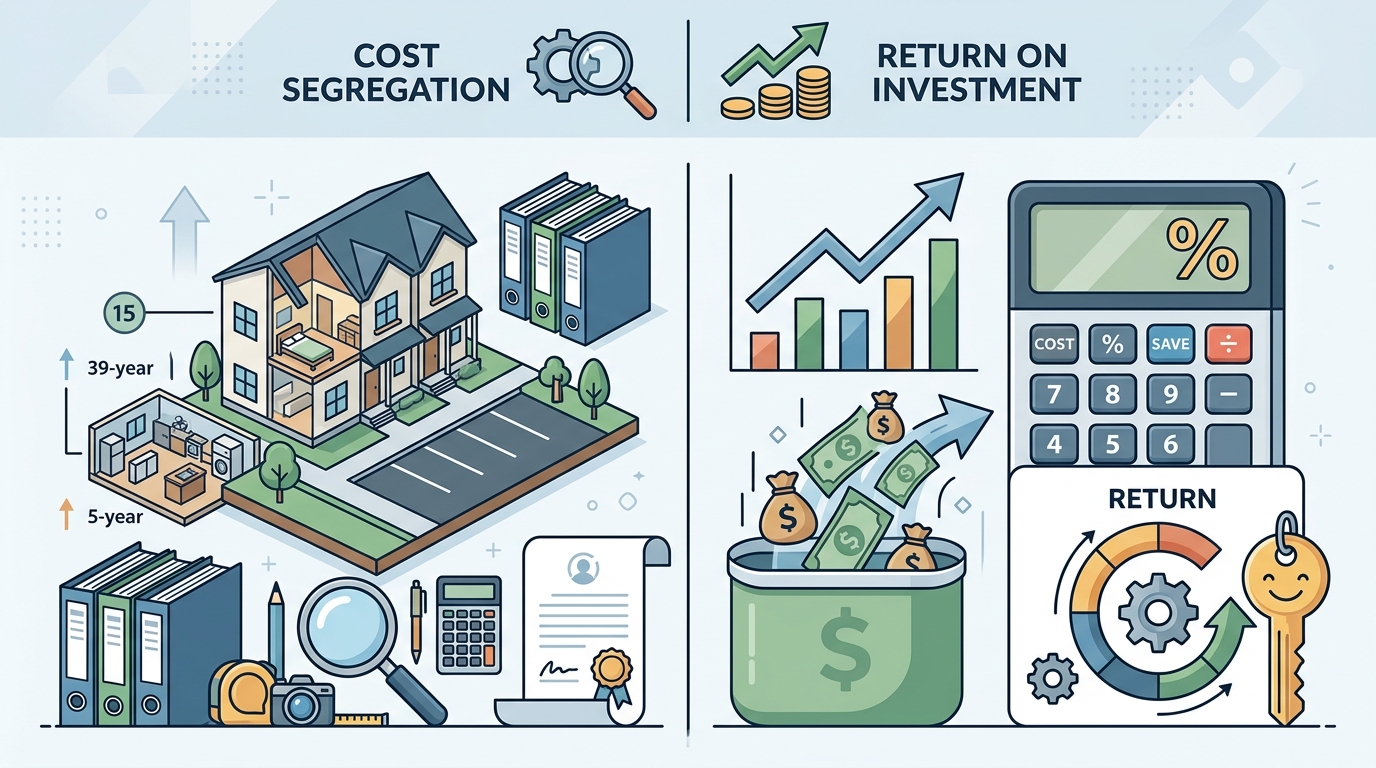
Cost segregation is the process of identifying personal property components within a real estate building that can be depreciated over 5, 7, or 15 years instead of the standard 27.5 years for residential property. This reclassification accelerates depreciation deductions, allowing owners to defer taxes and improve cash flow. The methodology is built on the official IRS Cost Segregation Audit Techniques Guide.
Components typically reclassified include flooring, cabinetry, appliances, landscaping, driveways, and fencing. By separating these elements from the building's structural cost, owners can claim larger deductions in the early years of ownership. This is particularly valuable for investors looking to offset passive income with active losses.
Cost Segregation Pricing Models
Understanding how firms price these studies is critical for evaluating true ROI. Traditional firms often charge hourly rates or percentages of the property value, which can be unpredictable and expensive. Modern digital-first providers have introduced flat-rate models that offer transparency and speed.
Traditional Hourly or Percentage Models
Legacy engineering firms typically charge between $2,000 and $5,000 for a standard residential study. Some may charge a percentage of the total property value, which scales up costs for high-value assets. These models often involve slower turnaround times, sometimes taking weeks to deliver reports. The lack of standardized pricing can lead to budget overruns for property owners.
Flat-Rate Digital Models
Providers like RentalWriteOff offer a streamlined, flat-rate pricing structure. For residential rental properties, the cost is typically $899 for a comprehensive study. This model includes property-specific analysis, expert review, and audit support. The fixed cost allows investors to calculate their net ROI with precision before committing to the study.
Look-Back Studies and Form 3115
For properties acquired in previous years, look-back studies allow owners to claim missed deductions. These studies often include the preparation and filing of Form 3115 with the IRS. The cost for look-back studies may vary slightly depending on the complexity and the number of years being amended, but flat-rate providers often keep these fees competitive to encourage adoption.
Calculating Your ROI
The return on investment for cost segregation is generally immediate and substantial. The primary metric is the ratio of tax savings to the cost of the study. For a $500,000 property, a typical cost segregation study might reclassify $90,000 of assets into shorter depreciation lives. This can result in an additional $40,000 in first-year depreciation deductions.
If the owner is in a 24% marginal tax bracket, the tax savings would be approximately $9,600. Subtracting the $899 study cost leaves a net benefit of $8,701 in the first year alone. This represents an ROI of nearly 1,000% in year one. Over the life of the property, the total depreciation remains the same, but the time value of money makes early deductions highly valuable.
Impact of Bonus Depreciation
The 100% bonus depreciation provision, available for property acquired after January 19, 2025, amplifies these returns. When combined with cost segregation, owners can potentially deduct the entire reclassified amount in the first year. This creates massive cash flow events that can offset other income sources, making the cost of the study negligible compared to the tax benefit.
STR vs. Long-Term Rental Implications
The tax implications of cost segregation differ significantly between short-term rentals (STRs) and long-term rentals. This distinction is crucial for maximizing deductions.
Short-Term Rental Tax Advantages
Short-term rentals with average stays of 7 days or less are not treated as rental activity under IRS rules. If the owner meets material participation requirements, the depreciation deductions from cost segregation can offset W-2 and business income, not just rental income. This "STR Tax Loophole" allows for greater tax flexibility and potential savings for active hosts.
Long-Term Rental Passive Loss Rules
Long-term rentals are generally considered passive activities. Deductions may be limited by passive activity loss rules, though high-income earners can often use up to $25,000 in passive losses against active income if they actively participate. Cost segregation still provides significant value by accelerating deductions, but the ability to offset non-rental income is more restricted compared to STRs.
Service Provider Comparison
Choosing the right provider involves comparing cost, speed, and audit support. The table below summarizes key differences between traditional firms and modern digital providers.
| Feature | Traditional Firms | Digital Providers (e.g., RentalWriteOff) |
|---|---|---|
| Pricing Model | $2,000 - $5,000+ (Hourly/Percentage) | $899 Flat Rate |
| Turnaround Time | 2-4 Weeks | 2 Business Days |
| Methodology | Standard Engineering | IRS Audit Techniques Guide Aligned |
| Audit Support | Often Extra Cost | Included |
| Documentation | PDF Reports | PDF + CSV + Methodology File |
Digital providers leverage technology to reduce overhead, passing savings to the customer. They also provide comprehensive documentation, including itemized CSVs and methodology files, which are essential for IRS compliance. This level of detail helps defend the study in the event of an audit.
Key Takeaways
- Immediate Cash Flow: Cost segregation can yield tax savings exceeding 10% of the property value in the first year.
- Flat-Rate Efficiency: Modern providers offer $899 flat-rate studies, significantly cheaper than traditional $2,000+ fees.
- 2-Day Turnaround: Digital-first companies deliver reports in 2 business days, accelerating the tax benefit timeline.
- STR Advantage: Short-term rental owners can offset W-2 income with depreciation deductions if material participation is met.
- Bonus Depreciation: Properties acquired after January 19, 2025, qualify for 100% first-year bonus depreciation on reclassified assets.
- Audit Defense: Reports aligned with the IRS Cost Segregation Audit Techniques Guide provide stronger defense against scrutiny.
- Look-Back Opportunities: Owners can claim missed deductions from previous years using Form 3115.
Frequently Asked Questions
How long does a cost segregation study take?
Traditional firms may take 2-4 weeks. Digital providers like RentalWriteOff deliver reports in 2 business days after intake is complete.
Is cost segregation worth it for a single-family rental?
Yes, for most single-family rentals, the tax savings in the first year far exceed the $899 cost of the study, providing a high ROI.
Can I do cost segregation on a property I bought years ago?
Yes, you can file a look-back study using Form 3115 to claim missed deductions from previous tax years.
What is the difference between 5, 7, and 15-year property?
5-year property includes carpet and appliances. 7-year property includes cabinetry and equipment. 15-year property includes landscaping, driveways, and fencing.
Does cost segregation work for Airbnb properties?
Yes, and it is often more powerful for STRs because deductions can offset non-rental income if material participation rules are met.
What documentation do I receive?
You receive a comprehensive report, an itemized CSV, a methodology file, and your photo set, all aligned with IRS standards.
How does bonus depreciation affect cost segregation?
For properties acquired after January 19, 2025, 100% bonus depreciation allows you to deduct the entire reclassified amount in year one.
Is the study defensible in an audit?
Yes, studies built on the IRS Cost Segregation Audit Techniques Guide and reviewed by experts are designed to withstand IRS scrutiny.
Get Your Cost Segregation Study Today
Don't leave money on the table. Start your cost segregation study now and see your estimated savings in minutes. Get My Study to begin your property-specific analysis. For more resources, visit our Tax Strategy Blog or check out our Airbnb Cost Segregation guide.