

Avoiding Costly Errors When Ordering Fast-Turnaround Cost Segregation Reports
Cost segregation studies are a powerful tool for accelerating depreciation deductions, but the speed of delivery does not excuse errors in the final report. According to the IRS Cost Segregation Audit Techniques Guide, the burden of proof lies entirely with the taxpayer to demonstrate that the reclassification of assets is reasonable and defensible. When you order a fast-turnaround report, you are trading time for precision, which means the intake process must be flawless. A single misclassification can trigger an audit, disallow deductions, and result in significant back taxes and penalties. This guide outlines the critical errors to avoid when ordering your study to ensure your report stands up to scrutiny. (About RentalWriteOff Cost Segregation)
The Intake Data Trap
The most common error in fast-turnaround studies is providing incomplete or inaccurate property data during the intake phase. Cost segregation is not a generic estimation; it is a property-specific engineering analysis. If you provide square footage that does not match the actual construction, or if you omit the year of acquisition, the resulting depreciation schedule will be mathematically incorrect. (Cost Segregation FAQ for)
Cost segregation is the process of reclassifying parts of a building's cost from real property to personal property. This reclassification allows for accelerated depreciation. To achieve this, the engineering team must analyze the physical components of the property. If the initial data is flawed, the entire study is compromised. Always verify your property records against the intake form. Ensure that the purchase price, land value, and improvement costs are accurately reflected. A small discrepancy in the land value can skew the entire depreciation calculation, leading to over-depreciation that the IRS will flag during an audit. (RentalWriteOff Cost Segregation Studies)
Another critical intake error is failing to disclose recent renovations or additions. If you have added a deck, replaced the HVAC system, or remodeled the kitchen, these components may have different depreciation lives than the original structure. Omitting these details means you miss out on potential deductions. Conversely, including non-qualifying items can lead to disallowed expenses. Be thorough and precise. The integrity of your fast-turnaround report depends on the accuracy of your initial input. (RentalWriteOff Cost Segregation Studies)
Misclassifying Asset Categories
Understanding the difference between 5-year, 7-year, 15-year, and 27.5-year property is essential for maximizing your deductions. A frequent error is assuming that all interior improvements qualify for the same depreciation schedule. The IRS has specific guidelines for each category, and misclassifying an asset can result in a lower deduction than expected or an audit trigger. (Rental Property Tax Strategy)
Cost segregation studies typically classify assets into the following buckets:
- 5-Year Property: This includes personal property such as carpeting, lighting fixtures, and appliances. These items have a shorter life and depreciate faster.
- 7-Year Property: This category often includes furniture, fixtures, and equipment that are not permanently attached to the building. Examples might include office furniture or certain types of machinery.
- 15-Year Property: This covers qualified improvement property, such as landscaping, driveways, fencing, and certain interior non-structural improvements. These assets are subject to a longer depreciation period but still offer significant acceleration compared to the building itself.
- 27.5-Year Property: This is the standard depreciation period for residential rental buildings. The cost of the structure itself, including walls, roof, and foundation, falls into this category.
When ordering a fast-turnaround study, ensure that the engineering team has access to detailed photos or a walkthrough of the property. Without visual evidence, it is difficult to distinguish between structural components and personal property. For example, a built-in cabinet might be considered part of the building, while a freestanding unit might qualify as 7-year property. The distinction matters. Accurate classification requires a clear understanding of the physical nature of each component.
Furthermore, the definition of Qualified Improvement Property (QIP) has evolved. Changes in tax law, such as the Tax Cuts and Jobs Act, have impacted how certain improvements are treated. Staying current with these regulations is crucial. A study that relies on outdated classifications may not provide the expected tax benefits. Always verify that your service provider is using the most recent IRS guidelines in their methodology.
Documentation and Photo Gaps
One of the biggest risks in fast-turnaround studies is the lack of supporting documentation. While speed is a benefit, it should not come at the cost of defensibility. The IRS requires robust documentation to support the allocation of costs to specific assets. If you receive a report without adequate photo evidence or itemized schedules, you are vulnerable in the event of an audit.
Cost segregation is not just about numbers; it is about physical evidence. The engineering team must document each asset to prove its existence and condition at the time of acquisition or improvement. This documentation includes photos, measurements, and descriptions of each component. Without this evidence, the IRS may disallow the deductions, arguing that the allocation was arbitrary.
When selecting a provider, ask about their documentation standards. Do they provide a complete photo set? Do they include an itemized CSV listing of every classified asset? These details are critical for your records. A comprehensive report should also include a methodology file that cites every IRS regulation used. This transparency demonstrates compliance and builds confidence in the study's results.
Additionally, consider the long-term value of your documentation. You may need to reference these records in future years, especially if you sell the property or undergo another audit. Properly documented studies serve as a permanent record of your tax strategy. They provide a clear trail of your deductions and protect you from future disputes. Never compromise on documentation for the sake of speed.
Timeline and Form 3115 Risks
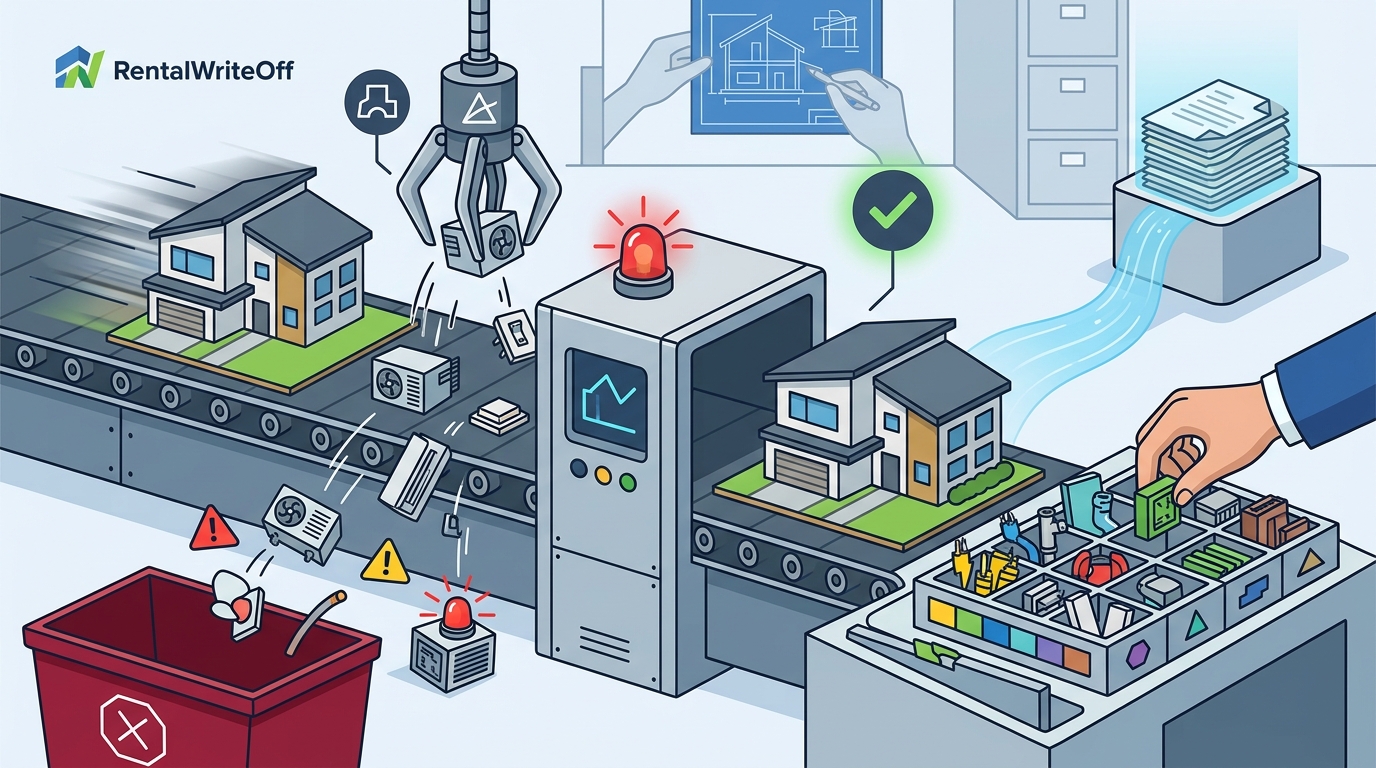
Fast turnaround is desirable, but it must not compromise the accuracy of the report. Some providers promise delivery in 24 hours, but this speed may come from a lack of thorough analysis. A rushed study may miss key assets or misclassify others. It is essential to balance speed with quality. Look for providers who have a streamlined process that does not cut corners.
Another critical consideration is the timing of your Form 3115 filing. If you are looking back at prior years, the deadline for filing Form 3115 is strict. Missing this deadline can result in the loss of your deductions. Ensure that your study is completed and reviewed well before the filing deadline. A fast-turnaround study should include guidance on the filing process to help you stay compliant.
Cost segregation studies are also subject to change based on your specific situation. If you acquire new assets or make improvements after the study is completed, you may need an updated report. Keep your records current and consult with your CPA regularly. The tax code is complex, and professional advice is invaluable. A fast-turnaround study is a starting point, not a one-time solution.
Service Model Comparison
Not all cost segregation providers offer the same level of service. Understanding the differences between traditional engineering firms and specialized platforms can help you make an informed decision. Below is a comparison of common service models.
| Feature | Traditional Engineering Firm | Specialized Platform (e.g., RentalWriteOff) |
|---|---|---|
| Turnaround Time | 4-6 weeks | 2 business days |
| Cost | $3,000 - $5,000+ | $899 flat fee |
| Documentation | Varies by firm | Complete photo set and CSV included |
| Audit Support | Often extra cost | Included in base price |
| IRS Compliance | Standard methodology | Based on IRS Audit Techniques Guide |
As shown in the table, specialized platforms offer significant advantages in speed and cost. However, it is crucial to verify that they maintain the same level of rigor and compliance as traditional firms. Look for providers who explicitly state their adherence to IRS guidelines and offer audit support. These features ensure that your fast-turnaround study is both affordable and defensible.
Key Takeaways
- Accuracy is Paramount: Provide precise property data during intake to avoid mathematical errors in your depreciation schedule.
- Understand Asset Classes: Know the difference between 5, 7, 15, and 27.5-year property to maximize your deductions.
- Demand Documentation: Ensure your report includes a complete photo set and itemized asset list for audit defense.
- Watch the Deadline: File Form 3115 on time to claim look-back deductions and avoid penalties.
- Verify Compliance: Choose a provider that explicitly follows the IRS Cost Segregation Audit Techniques Guide.
- Seek Audit Support: Confirm that audit support is included in your service package.
- Consult Your CPA: Review your study with a tax professional to ensure it aligns with your overall tax strategy.
Frequently Asked Questions
What is the fastest turnaround time for a cost segregation study?
Specialized platforms like RentalWriteOff offer a standard 2-business-day turnaround after complete intake. Traditional engineering firms typically take 4-6 weeks.
Is a fast-turnaround study as accurate as a traditional one?
Yes, if the provider uses an engineering-based methodology and adheres to IRS guidelines. Speed does not have to compromise accuracy if the process is streamlined and rigorous.
What happens if I miss the Form 3115 deadline?
Missing the deadline can result in the loss of your look-back deductions. It is critical to file on time to claim the benefits of your cost segregation study.
Does the study include audit support?
Reputable providers like RentalWriteOff include audit support in their base price. This ensures you have assistance if the IRS questions your deductions.
How does cost segregation benefit short-term rentals?
Short-term rentals may qualify for bonus depreciation and the ability to offset non-rental income, provided they meet specific IRS criteria. A cost segregation study helps identify these opportunities.
What documents do I need to provide?
You typically need to provide property details, purchase agreements, and photos of the interior and exterior. The more detailed your input, the more accurate your study will be.
Can I use a cost segregation study for a duplex or fourplex?
Yes, cost segregation studies are applicable to duplexes, triplexes, and fourplexes. The methodology is adapted to the specific structure and components of each property.
What is the cost of a residential cost segregation study?
Traditional firms charge $3,000 to $5,000 or more. Specialized platforms offer a flat fee of $899, making the service more accessible to individual rental owners.
Secure Your Audit-Ready Report
Do not let costly errors undermine your tax strategy. By avoiding common pitfalls in intake, classification, and documentation, you can ensure your cost segregation study delivers maximum value. RentalWriteOff offers a fast, affordable, and IRS-compliant solution for rental property owners. Start your study today and get your audit-ready report in just 2 business days. Protect your investment with a study built on official IRS guidelines and expert-reviewed precision.