

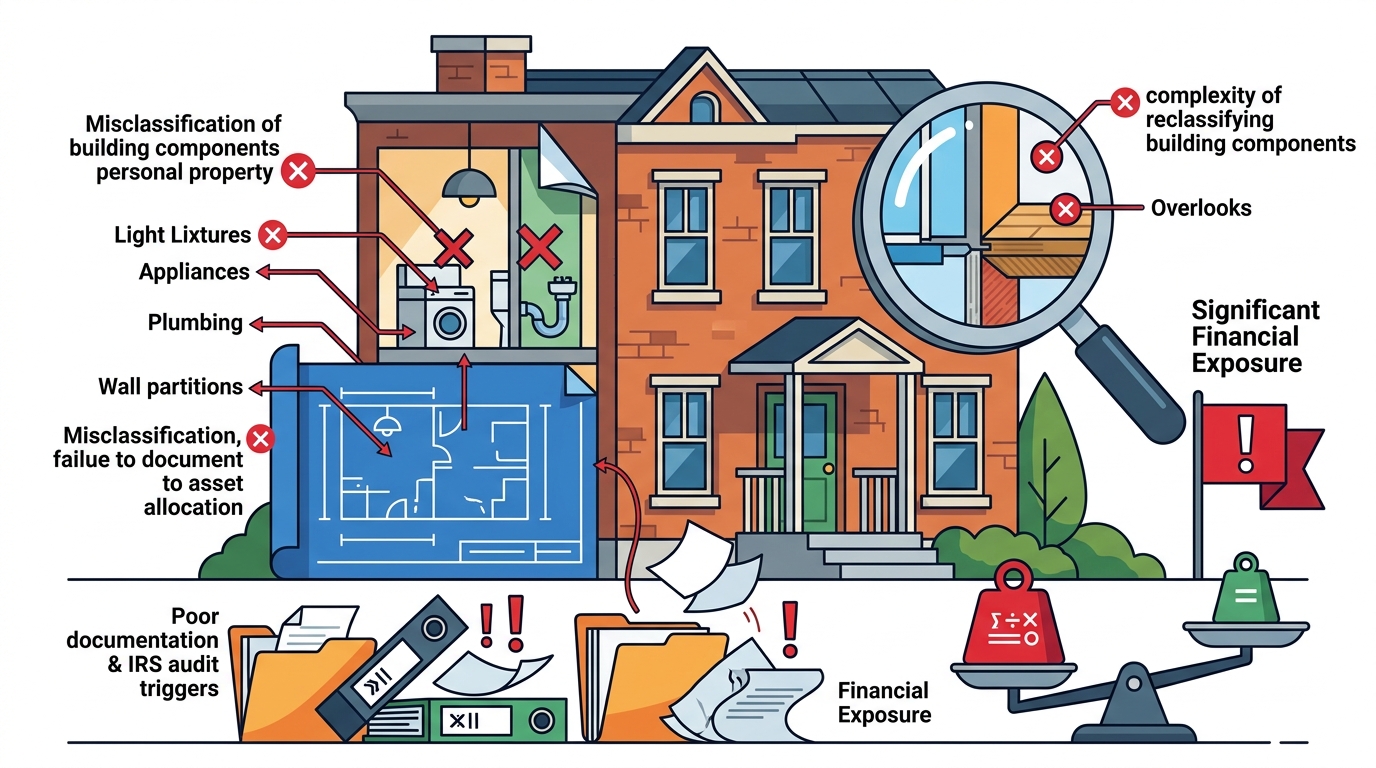
Cost segregation is a powerful tax strategy, but improper execution can trigger IRS audits or result in lost deductions. According to the IRS Cost Segregation Audit Techniques Guide, the most frequent errors involve misclassifying personal property or failing to document the engineering basis for asset allocation. Small rental owners often overlook the complexity of reclassifying building components, leading to significant financial exposure. This article outlines the critical errors to avoid and how to implement a defensible strategy. (About RentalWriteOff Cost Segregation)
Timing and Eligibility Errors
One of the most common mistakes is waiting too long to initiate a cost segregation study. Many property owners believe they can perform this analysis years after acquisition without consequence. However, the timing of the study directly impacts your ability to utilize look-back provisions and bonus depreciation rules. (Cost Segregation FAQ for)
Missing the Bonus Depreciation Window
For properties acquired after January 19, 2025, the 100% bonus depreciation rule applies to reclassified assets. If you delay your study, you may miss the window to claim these accelerated deductions in the year of acquisition. This delay forces you to depreciate assets over 5, 7, or 15 years instead of taking the full deduction immediately. The financial impact is substantial, as the time value of money favors immediate deductions. (RentalWriteOff Cost Segregation Studies)
Incorrect Acquisition Date Definition
Defining the "acquisition date" is another frequent error. For new construction, this date is typically the date the property is placed in service. For existing properties, it is the date of purchase. Misidentifying this date can lead to incorrect depreciation schedules and potential penalties. It is crucial to align your cost segregation study with the exact date the property became usable for its intended purpose. (RentalWriteOff Cost Segregation Studies)
Documentation and Evidence Failures
The IRS scrutinizes cost segregation studies heavily. A study without robust documentation is essentially a guess, and guesses are often disallowed during an audit. The IRS Audit Techniques Guide emphasizes the need for a clear engineering basis for every classified asset. (Rental Property Tax Strategy)
Lack of Engineering Basis
A valid cost segregation study must be based on engineering principles, not just accounting estimates. This means using construction cost data, blueprints, and physical inspections to determine the value of specific components. Without this engineering basis, the IRS may reject the study entirely. RentalWriteOff ensures every report includes a complete methodology file citing every IRS regulation used, providing the necessary defense.
Inadequate Photo Evidence
Photographic evidence is critical for verifying the existence and condition of assets at the time of the study. Many owners fail to document the property thoroughly, leading to gaps in the evidence trail. A comprehensive photo set helps substantiate the itemized CSV listing of every classified asset. This documentation is vital for defending the study against IRS scrutiny.
Incorrect Asset Classification
Classifying assets into the correct depreciation buckets is the core of cost segregation. Errors in this area can lead to under-depreciation or over-depreciation, both of which are problematic.
Mixing Personal and Real Property
One of the most significant errors is misclassifying personal property as real property or vice versa. Personal property, such as carpeting, lighting fixtures, and landscaping, can be depreciated over 5, 7, or 15 years. Real property, such as the building structure, must be depreciated over 27.5 years for residential rentals. Misclassifying these assets can result in missed deductions or audit flags.
Ignoring Land Improvements
Land improvements, such as driveways, fencing, and sidewalks, are often overlooked. These assets are eligible for 15-year depreciation but are frequently grouped with the building structure. Proper itemization of land improvements can significantly accelerate your deductions. Our team analyzes your data to identify these components and reviews the classifications before your report is finalized.
Short-Term Rental Specific Pitfalls
Short-term rental (STR) owners face unique tax considerations that differ from long-term rental owners. Understanding these differences is crucial for maximizing deductions.
Material Participation Rules
For STRs with average stays of 7 days or less, the activity is not treated as rental activity under IRS rules. This distinction allows depreciation deductions to offset W-2 and business income, not just rental income. However, this benefit requires material participation, meaning you must actively run the property and document the hours. Failing to document this participation can disqualify you from these enhanced deductions.
Furnished Property Deductions
Furniture, appliances, decor, and electronics in an STR may qualify for shorter depreciation schedules. Many owners fail to include these items in their cost segregation study, leaving money on the table. A property-specific study determines what can be reclassified and documents the allocation. This includes items like kitchen appliances, bathroom fixtures, and even landscaping.
Audit Defense and Compliance
Even with a perfect study, the risk of an IRS audit remains. Having a defensible study is your best protection.
IRS Compliance Standards
Your study must meet the standards expected by IRS auditors. This includes using defensible values and asset classes for each component. The IRS Cost Segregation Audit Techniques Guide provides specific criteria for what constitutes a compliant study. RentalWriteOff builds its methodology on these official guidelines, ensuring your report stands up to scrutiny.
Audit Support Inclusion
Many cost segregation providers do not offer audit support. If the IRS questions your study, you need a provider who can defend the methodology. RentalWriteOff includes audit support with every report, giving you peace of mind. This support includes access to the engineering team and the ability to explain the classifications to auditors.
Key Takeaways
- Timing is Critical: Initiate your study immediately after acquisition to maximize bonus depreciation benefits, especially for properties acquired after January 19, 2025.
- Engineering Basis Required: Ensure your study is based on engineering principles, not just accounting estimates, to meet IRS standards.
- Document Everything: Maintain comprehensive photo evidence and an itemized CSV listing of every classified asset to defend against audits.
- STR Specifics: Short-term rental owners must document material participation to offset non-rental income with depreciation deductions.
- Audit Support: Choose a provider that includes audit support, such as RentalWriteOff, to protect your investment.
- Correct Classification: Properly classify land improvements and personal property to avoid misallocation of depreciation schedules.
- Compliance First: Align your study with the IRS Cost Segregation Audit Techniques Guide to ensure defensibility.
Frequently Asked Questions
What is cost segregation?
Cost segregation is a tax strategy that reclassifies certain building components from real property to personal property, allowing for accelerated depreciation and larger tax deductions.
How long does a cost segregation study take?
Standard residential reports from RentalWriteOff target a 2-business-day delivery after complete intake, providing rapid access to your tax benefits.
Can I do a cost segregation study on an existing property?
Yes, you can perform a look-back cost segregation study on existing properties. This allows you to claim missed deductions from previous years, subject to IRS regulations.
What is the difference between 5-year and 15-year property?
5-year property includes items like carpeting and appliances, while 15-year property includes land improvements like driveways and fencing. Both depreciate faster than the 27.5-year building structure.
Do I need an engineer for a cost segregation study?
While not legally required, an engineering-based study is the most defensible against IRS audits. RentalWriteOff uses engineering-based analysis to ensure compliance and accuracy.
How much can I save with cost segregation?
Savings vary based on property value and asset allocation. A typical study can accelerate tens of thousands of dollars in deductions, significantly reducing your current tax liability.
What is bonus depreciation?
Bonus depreciation allows you to deduct 100% of the cost of qualifying property in the year it is placed in service. For properties acquired after January 19, 2025, this applies to reclassified assets in cost segregation studies.
Is cost segregation worth it for small rentals?
Yes, even for small rentals, the accelerated deductions can provide substantial cash flow benefits. RentalWriteOff makes this strategy affordable with a flat fee of $899 per property.
Get Your Defensible Study
Don't let common mistakes cost you thousands in tax savings. RentalWriteOff provides engineering-based, expert-reviewed cost segregation studies for a flat fee of $899. Our reports are built on official IRS guidelines and include audit support. Start your cost segregation study today and maximize your rental property deductions.